Structural Drying in Fort Worth, TX
Surfaces can feel dry while framing, slab and wall bottoms stay wet. Fort Worth's humid subtropical climate slows natural drying, so the drying team sets air movers, dehumidifiers and desiccant units to the IICRC S500 goal and logs the readings every day.
(888) 527-9134Walls still damp? Call about structural drying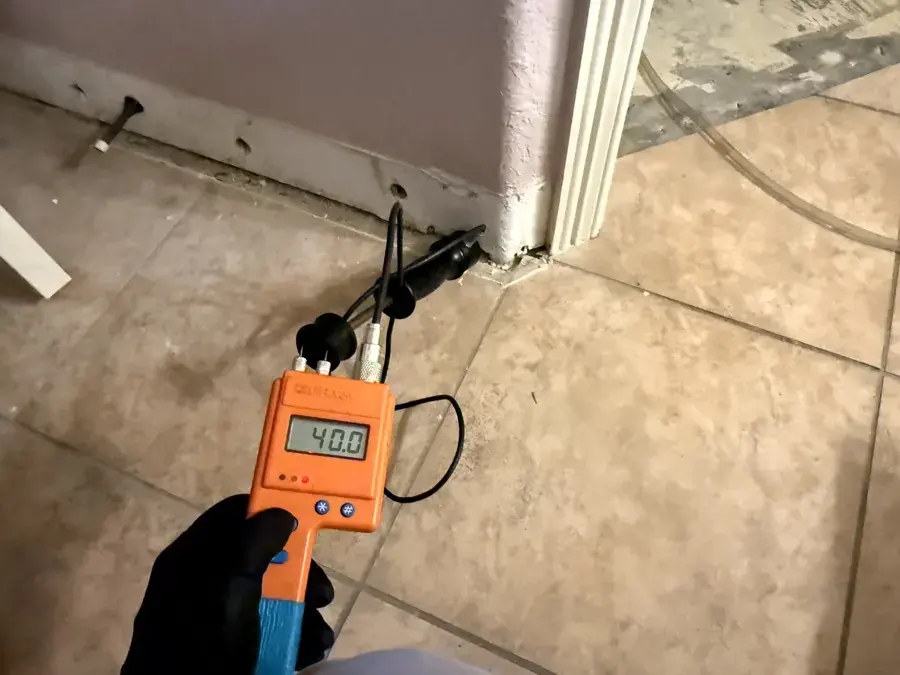
What to do first about structural drying in Fort Worth
- Stop adding water. Close the valve or main at the house, and fix or isolate the source so drying equipment is not fighting an active leak.
- Open closed spaces. Open cabinet doors and closet doors, and pull furniture from walls, so air can reach damp baseboards and wall bottoms.
- Do not rely on touch. A wall that feels dry can hold water inside, so avoid painting, sealing or covering anything until it has been metered.
- Keep records. Save photos, the moisture map and any readings, since adjusters work from documentation and drying logs show the job was finished.
Why surface drying is not enough in Fort Worth
Slab, brick and wood frame dry on different timelines, and Fort Worth's humid subtropical climate slows natural drying. Rain of roughly 34 to 37 inches a year keeps the air damp, which leaves materials holding water longer than they appear to.
A wall can look and feel dry while the bottom plate and insulation hold water. Without readings, that moisture can stay for weeks, which is why drying continues until each material matches a dry reference in the same home.
What does structural drying cost in Fort Worth, TX?
Structural drying in Fort Worth is priced by the number of wet rooms, the material class and how long equipment must run. Light loss in one area sits low, and dense materials across several rooms sit high. The North Richland Hills structural drying ranges show typical figures.
Class 1 or 2, one area
- Air movers placed
- One dehumidifier running
- Daily readings logged
Class 3, several rooms
- Wall cavities vented open
- Several LGR dehumidifiers
- Baseboards removed first
Class 4, dense materials
- Desiccant units
- Drying mats on floors
- Extended equipment time
For a planning range on your own rooms, use the water damage cost calculator. These are typical ranges, never a quote: the category of water, the square footage, the material class and how fast drying started set the real number.
How structural drying is handled in Fort Worth
Classify the loss
The crew sets the water category and the S500 class from how much water reached which materials, and that choice sizes the equipment.
Place equipment
Air movers are aimed along walls and floors, LGR dehumidifiers lower the room humidity and desiccant units join for dense, slow-drying materials that resist everything else.
Open what holds water
Baseboards come off, and small holes in drywall let air reach wet cavities, so moisture can leave without tearing out whole walls or ceilings.
Read and release
Each material is metered every day and the equipment leaves only when readings match the dry reference from an unaffected room.
Slab, brick and wood drying differently
Wood framing drops water faster than brick or concrete, and drywall gives it up faster than either. Treating them as one material would end the job too early on the slowest one, leaving moisture behind where nobody can see it.
Each material is read separately, and the slowest one sets the schedule, which is why readings, not days, decide when equipment leaves. A house can pass on drywall and still fail on a bottom plate or a stretch of slab.
- Drywall dries first
- Wood framing follows
- Brick and concrete lag
Equipment sized to the loss
Air movers push dry air across wet surfaces, while LGR dehumidifiers pull water out of the room. Desiccant units help where dense materials or cooler spaces slow other equipment.
The setup is moved as wet zones shrink, so machines never sit where they are no longer needed, and noise drops as the job goes on. Start with water extraction in Fort Worth when standing water is still present.
Daily logs and the claim file
Daily temperature, humidity and material readings show the drying progress and the final dry result, which is what adjusters ask for. The records also support a repair decision on each material, such as which baseboards can go back on. Sudden and slow water are treated differently, so ask your own insurer, and see the Fort Worth hub for the loss types that lead to structural drying.
Structural Drying across Fort Worth and nearby towns
Structural drying covers ZIP codes 76137 and 76148, including Summerfields, Park Glen, Fossil Park and Fossil Creek, plus the older Bonnie Brae and Browning Heights area in 76117 near Haltom Road and Airport Freeway.
The same service in nearby towns: Structural Drying in Haltom City, Structural Drying in Saginaw, Structural Drying in Richland Hills.
Related water damage services in Fort Worth
Structural Drying questions in Fort Worth, TX
Why do drying machines run for days?
Water inside framing, slab and wall bottoms leaves slowly. Equipment runs until each material reads like a dry reference, not until the surface feels dry to the hand.
How do I know the job is done?
The daily moisture log shows readings falling to match a dry material in an unaffected room. That record also goes to the adjuster as proof that drying finished, with dates and numbers.
Do walls have to be torn out?
Not usually. Baseboards come off, small holes let air reach cavities and only materials that cannot dry, such as soaked insulation, are removed from the wall.
Why does Fort Worth air slow drying?
The climate is humid subtropical, so damp outdoor air limits how fast water can leave materials. Dehumidifiers do the work that open windows cannot do, especially after a wet spring.
What is the difference between Class 1 and Class 4?
Class 1 is a small area with little wet material. Class 4 involves dense materials like concrete, hardwood or plaster that hold water deep and need desiccant units to release it.
Can drying equipment come out early?
Removing it before readings match leaves moisture inside walls, which can cause damage later and bring the crew back. The readings decide when the equipment leaves, not the calendar.
Structural Drying in Fort Worth? Start the dry-out now.
The response team answers 24/7 and sends the closest extraction crew with meters, pumps and drying equipment.
Call (888) 527-9134 now