Water Extraction in Fort Worth, TX
In a Fort Worth house built in the 1980s or 1990s, water that reaches the floor spreads fast and starts soaking pad, baseboards and wall bottoms. The extraction crew pumps it out early, then the drying team sets equipment to the IICRC S500 goal.
(888) 527-9134Water standing in a room? Call for extraction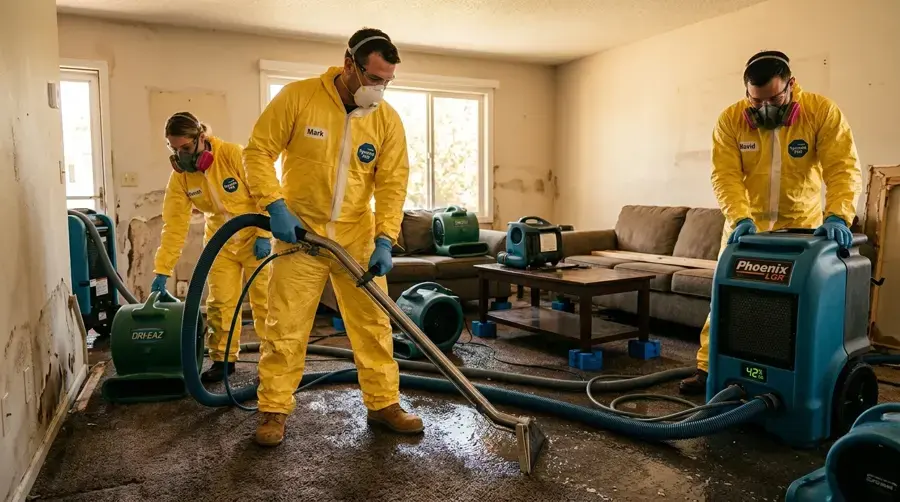
What to do first about water extraction in Fort Worth
- Stop the source. Shut the main valve at the house, or the fixture valve for a single leak, then keep the family out of rooms holding standing water.
- Mind the electricity. Leave breakers alone unless the panel is dry and reachable without wading, and never touch wet outlets, cords or appliances.
- Document first. Wide and close photos of each wet room, taken before furniture moves, give the claim file a timestamped starting point.
- Get weight off the floor. Lift rugs, boxes and cushions from wet flooring, and slip foil or plastic under furniture legs that cannot be moved.
Why extraction comes first in Fort Worth
Northeast Fort Worth is mostly 1980s and 1990s single-family suburban housing, with homes in Summerfields, Park Glen and Fossil Park largely 25 to 45 years old. Water that reaches the floor of a house like that moves outward quickly and wicks up the drywall.
Pulling the bulk of it out mechanically leaves the dehumidifiers far less to evaporate. Humid subtropical air already slows natural drying here, so every gallon removed by pump instead of by air shortens the entire job.
What does water extraction cost in Fort Worth, TX?
Extraction in Fort Worth is priced by how many rooms are wet, the water category and how much pad and framing absorbed before pumping began. A one-room clean loss sits low, while contaminated or house-wide water sits high. The North Richland Hills water extraction ranges show typical figures.
One room, clean water
- Truck-mounted pump-out
- Fans and one dehumidifier
- Daily moisture readings
Hallway or several rooms
- Pad assessed, carpet floated
- Baseboards pulled for airflow
- Several LGR dehumidifiers
Whole floor or Category 2 and 3
- Porous materials removed
- Antimicrobial on framing
- Containment where needed
For a planning range on your own rooms, use the water damage cost calculator. These are typical ranges, never a quote: the category of water, the square footage, the material class and how fast drying started set the real number.
How water extraction is handled in Fort Worth
Walk and map
The technician walks each room with pinless meters and a thermal camera, marking where the wet edge stops, including under walls and behind cabinets that look dry.
Pull the water
Truck-mounted extraction removes the standing water first, so it leaves the house for good instead of drifting into the next room.
Press the pad
Weighted wands squeeze water out of carpet and pad in place, and subsurface passes lift whatever sits trapped between the pad and the floor.
Hand off to drying
Air movers and dehumidifiers are sized from the map, and readings are logged each day until every material matches a dry reference.
Why a household wet vac falls short
A household wet vac clears a puddle but cannot draw water out of a soaked pad. The truck-mounted unit pushes a far stronger vacuum through a weighted wand, so water leaves carpet and pad without lifting the carpet.
Whatever stays in the material is what the dehumidifiers must pull from the air, so extraction affects the length of the dry-out more than any fan does. Less water left behind also means less equipment noise and fewer days of drying.
- Weighted wands press water from pad in place
- Subsurface passes reach water between pad and floor
- Hard floors get squeegee and wand passes first
Mapping the wet edge before equipment goes down
Meters and thermal imaging show where water traveled, and in a suburban floor plan it often ran under a wall into a closet or bedroom that looks perfectly dry from the doorway, which is why every adjoining room is checked.
From that map comes the equipment count for each room under the S500 classes, and the same map opens the claim file. Ask for a copy.
What happens to carpet and pad
Carpet over clean supply water commonly stays and dries in place, though the pad depends on its time wet. Gray water shifts that decision toward replacement, and Category 3 water takes out carpet and pad together. The carpet water damage page for Fort Worth explains each case, and the Fort Worth hub lists the other loss types.
Water Extraction across Fort Worth and nearby towns
Extraction crews cover ZIP codes 76137 and 76148, including Summerfields, Park Glen and Fossil Park, plus the older Bonnie Brae and Browning Heights area in 76117, close to Haltom Road and Airport Freeway.
The same service in nearby towns: Water Extraction in Haltom City, Water Extraction in Saginaw, Water Extraction in Richland Hills.
Related water damage services in Fort Worth
Water Extraction questions in Fort Worth, TX
How long does extraction take in a Fort Worth house?
Pumping out a few rooms usually takes a few hours. Drying is the longer part, and the readings decide when it ends, since a contained clean-water loss and a long-soaked one behave very differently.
Can towels and a shop vac do the job?
A small spill caught within minutes can go to towels and a wet vac. After water soaks into pad or slides under a wall, a shop vac misses most of it, and the leftover moisture swells baseboards and breeds odor later.
Does the carpet have to be thrown out?
Sometimes it stays. When the water was clean and pump-out began promptly, carpet is frequently dried in place. The pad is replaced more often, and sewage or floodwater contact sends both out.
Does homeowners insurance pay for extraction in Texas?
A sudden event such as a burst supply pipe is usually handled after the deductible, while rising surface water from a storm is a flood policy matter. Policies differ, so ask your own insurer.
What if the water came from outside in a storm?
Runoff that crossed soil or pavement counts as Category 3, so the crew contains the area and applies antimicrobial before drying. Details sit with flood cleanup in Fort Worth.
Does standing water cause lasting damage overnight?
It can start to. Pad, baseboards and wall bottoms keep absorbing moisture, and the humid climate here makes drying harder the longer a room stays wet, so early extraction protects more material.
Water Extraction in Fort Worth? Start the dry-out now.
The response team answers 24/7 and sends the closest extraction crew with meters, pumps and drying equipment.
Call (888) 527-9134 now