Slab Leak Water Damage Restoration in North Richland Hills, TX
A slab leak hides under the concrete until a warm spot, a wet baseboard or a jump in the water bill gives it away. The restoration team finds how far the water traveled, opens only what has to open and dries the slab and walls to a verified reading.
(888) 527-9134Warm spot or wet baseboard? Call about the slab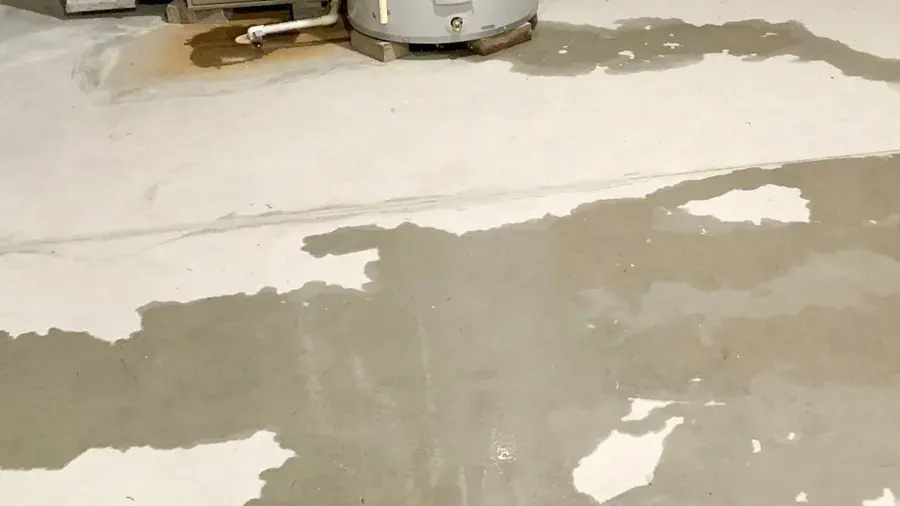
What to do first about slab leak water damage in North Richland Hills
- Check the meter. Turn off every fixture and watch the water meter. If the leak indicator still spins, a line is leaking somewhere, possibly under the slab.
- Shut the main if water is surfacing. If water is coming up through flooring or a crack, close the main shutoff to stop the flow.
- Feel and photograph. Note warm spots in the floor, damp carpet along a wall and swollen baseboards, and photograph them before anything is pulled up.
- Call a plumber for the line. A plumber confirms and repairs the pipe; the drying team handles the wet floors, walls and cabinets around it.
Why slabs leak in North Richland Hills
Most of the city was built in the 1970s, 1980s and 1990s on concrete slabs over clay soils that swell when wet and shrink in drought. That seasonal movement stresses the copper and plastic supply lines and the drain lines cast into or under the slab.
A long dry summer followed by heavy fall rain is a common pattern for new slab leaks across northeast Tarrant County. Hot water lines leak most often, which is why a warm spot on tile or a warm patch of carpet is such a useful clue.
What does slab leak water damage cost in North Richland Hills, TX?
In North Richland Hills, TX, the water damage side of a slab leak typically runs $1,500 to $8,000 or more, separate from the plumbing repair. A leak caught early under one room costs far less than one that soaked carpet pad, cabinets and drywall across a whole side of the house.
Caught early, one room
- Moisture map of the slab
- Flooring lifted only where wet
- Air movers and dehumidifier
Several rooms or cabinets
- Toe-kicks and baseboards removed
- Wall cavity drying
- Daily readings for the file
Long-running leak
- Hardwood or tile replaced
- Drywall cut above wet line
- Desiccant drying of dense slab
For a planning range on your own rooms, use the water damage cost calculator. These are typical ranges, never a quote: the category of water, the square footage, the material class and how fast drying started set the real number.
How slab leak water damage is handled in North Richland Hills
Map the moisture
The tech who does the walkthrough runs pinless meters and thermal imaging so the plan matches what is actually wet in the North Richland Hills home, not what looks wet.
Stop the source and extract
The extraction crew pulls standing water with truck-mounted extraction, so the water leaves the building instead of moving to the next room.
Set the drying system
Air movers go in at each room's evaporation load and LGR dehumidifiers pull that moisture out of the air; desiccants come in for dense Class 4 materials.
Verify dry and document
The drying team logs readings daily and pulls equipment only when wet materials sit within 2 to 4 points of a dry reference, then the file goes to the adjuster.
Finding how far the water went
The plumber finds the pipe. The restoration team finds the water. Thermal imaging shows the cool or warm pattern spreading from the leak, and pinless and probe meters confirm which flooring, baseboards and wall bottoms are wet.
Because water under flooring spreads along the slab, the wet area is often much larger than the spot that first looked damp. Mapping it keeps the demolition small and the drying complete.
- Carpet is lifted at the edge so the pad and slab can be read
- Tile and laminate are checked with meters before anything is broken
- Cabinets get toe-kicks removed so air reaches the slab underneath
Drying a concrete slab
Concrete holds water and gives it up slowly. The drying team uses air movers at floor level, LGR dehumidifiers and, for a slab that stayed wet a long time, desiccant dehumidifiers or mat systems that draw moisture up and out.
Equipment stays until readings on the slab and the bottom of the walls reach the drying goal compared with a dry reference in the same house. New flooring glued or laid on a slab that is still wet tends to fail, which is why the readings decide when the floor goes back.
Slab leaks and the insurance claim
Many Texas homeowners policies treat the water damage from a sudden slab leak differently from the cost of breaking out the slab to reach the pipe. A complete file helps either way: the moisture map from day one, timestamped photos before any flooring comes up, daily drying logs and the plumber's leak report. Coverage depends on your policy, so it is worth checking with your own insurer.
Slab Leak Water Damage across North Richland Hills and nearby towns
The North Richland Hills restoration crew covers ZIP codes 76180 and 76182, the Smithfield and Iron Horse areas, HomeTown and the Davis Boulevard and Rufe Snow Drive corridors, plus Richland Hills, Haltom City, Hurst, Watauga and the rest of northeast Tarrant County.
The same service in nearby towns: Slab Leak Water Damage in Richland Hills, Slab Leak Water Damage in Haltom City, Slab Leak Water Damage in Hurst, Slab Leak Water Damage in Watauga, Slab Leak Water Damage in Bedford, Slab Leak Water Damage in Colleyville, Slab Leak Water Damage in Keller, Slab Leak Water Damage in Fort Worth, Slab Leak Water Damage in Saginaw, Slab Leak Water Damage in Euless.
See every town and ZIP code covered.
Further reading: EPA WaterSense on finding household leaks and Texas A&M AgriLife Extension.
Related water damage services in North Richland Hills
Slab Leak Water Damage questions in North Richland Hills, TX
What are the signs of a slab leak in North Richland Hills?
Warm spots on tile or carpet, damp carpet along an interior wall, swollen baseboards, the sound of running water with every fixture off, a water meter that keeps moving and a water bill that jumps for no reason.
Does the whole floor have to come up?
Usually not. Moisture mapping shows exactly where the water went, so flooring is lifted or removed only where it is wet and cannot be dried in place.
How long does a slab take to dry?
A slab under one or two rooms often dries in three to five days with air movers and dehumidifiers. A leak that ran for weeks can take longer and may need desiccant drying or mat systems on the concrete.
Who fixes the pipe?
A plumber locates and repairs the leaking line, sometimes by rerouting it through the attic instead of breaking the slab. The restoration team handles extraction, drying and the documentation of the water damage.
Is slab leak water damage covered by insurance?
Sudden water damage from a slab leak is often covered after the deductible, while slow seepage and the pipe repair may be treated differently. Coverage depends on your policy, so it is worth checking with your own insurer.
Can a slab leak cause foundation trouble?
Water leaking under a slab can soften or swell the clay below it. A foundation question belongs to a structural engineer or foundation contractor; the drying team focuses on getting the floors and walls dry and documented.
Slab Leak Water Damage in North Richland Hills? Start the dry-out now.
The response team answers 24/7 and sends the closest extraction crew with meters, pumps and drying equipment.
Call (888) 527-9134 now