Toilet Overflow Cleanup in North Richland Hills, TX
An overflowing toilet can be clean tank water or sewage, and the difference decides what gets saved. The restoration team classifies the water first, then extracts, sanitizes and dries the bath, the subfloor edges and any carpet it reached.
(888) 527-9134Overflow on the floor? Call for cleanup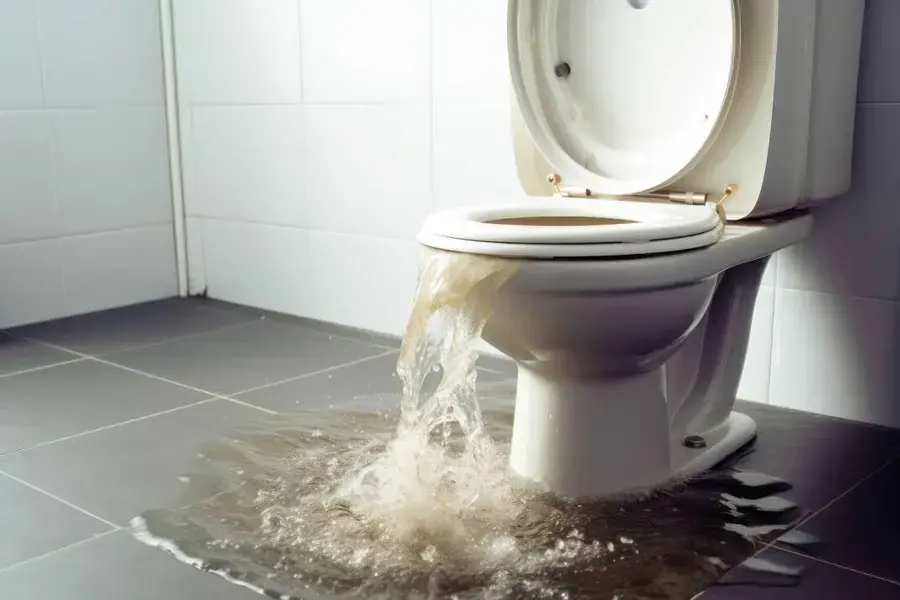
What to do first about toilet overflow cleanup in North Richland Hills
- Close the toilet valve. Turn the shutoff valve behind the toilet clockwise. If it is stuck, lift the float in the tank to stop refilling.
- Do not keep flushing. A clog or a full sewer lateral will only send more water onto the floor.
- Keep people out. If the water came from the bowl, keep children and pets out and wear gloves.
- Check other drains. If tubs or floor drains are also backing up, the problem is the sewer line, not the toilet.
Why the source matters
Water from a cracked tank or a failed fill valve is clean. Water from the bowl with urine only is gray water. Water from a bowl with feces, or from a backed-up sewer line, is Category 3, and porous materials it touched are removed, not dried.
In North Richland Hills, many 1980s homes still have carpet in bedrooms right outside the bathroom door, so an overflow that crossed the threshold changes the job from a tile wipe-down to carpet and pad decisions.
What does toilet overflow cleanup cost in North Richland Hills, TX?
In North Richland Hills, TX, toilet overflow cleanup typically runs $300 to $3,500 or more. A clean tank overflow on tile is at the low end; a sewage overflow that reached carpet in the hallway and a ceiling below is at the high end.
Clean water on tile
- Extraction
- Baseboard check
- Drying and readings
Gray water or carpet reached
- Cleaning and sanitizing
- Pad assessed or replaced
- Air movers and dehumidifier
Sewage or upstairs bath
- Porous materials removed
- Antimicrobial applied
- Ceiling below opened and dried
For a planning range on your own rooms, use the water damage cost calculator. These are typical ranges, never a quote: the category of water, the square footage, the material class and how fast drying started set the real number.
How toilet overflow cleanup is handled in North Richland Hills
Map the moisture
The tech who does the walkthrough runs pinless meters and thermal imaging so the plan matches what is actually wet in the North Richland Hills home, not what looks wet.
Stop the source and extract
The extraction crew pulls standing water with truck-mounted extraction, so the water leaves the building instead of moving to the next room.
Set the drying system
Air movers go in at each room's evaporation load and LGR dehumidifiers pull that moisture out of the air; desiccants come in for dense Class 4 materials.
Verify dry and document
The drying team logs readings daily and pulls equipment only when wet materials sit within 2 to 4 points of a dry reference, then the file goes to the adjuster.
How an overflow is cleaned up
The extraction crew removes standing water first, then the mitigation team cleans and sanitizes every hard surface the water touched. Baseboards are pulled where water ran under them, because the bottom of the drywall wicks it up behind the trim.
If the water was Category 3, carpet, pad and any drywall it touched are removed and bagged, an EPA-registered antimicrobial is applied and the area is dried and checked with meters.
- Wax rings that failed can leak under the floor for weeks before showing
- Toilets on second floors often show up as ceiling stains below
- Vanity cabinets are checked for trapped water
When the toilet is not the real problem
If several drains back up at once, or water rises in a tub when the toilet is flushed, the sewer lateral is likely blocked. That is a plumbing call first and a sewage backup cleanup job second.
Documenting an overflow
Photos of the source, the water category the restoration team recorded, removed-material notes and drying logs make the claim file. Coverage depends on your policy, so it is worth checking with your own insurer.
Toilet Overflow Cleanup across North Richland Hills and nearby towns
The North Richland Hills restoration crew covers ZIP codes 76180 and 76182, the Smithfield and Iron Horse areas, HomeTown and the Davis Boulevard and Rufe Snow Drive corridors, plus Richland Hills, Haltom City, Hurst, Watauga and the rest of northeast Tarrant County.
The same service in nearby towns: Toilet Overflow Cleanup in Richland Hills, Toilet Overflow Cleanup in Haltom City, Toilet Overflow Cleanup in Hurst, Toilet Overflow Cleanup in Watauga, Toilet Overflow Cleanup in Bedford, Toilet Overflow Cleanup in Colleyville, Toilet Overflow Cleanup in Keller, Toilet Overflow Cleanup in Fort Worth, Toilet Overflow Cleanup in Saginaw, Toilet Overflow Cleanup in Euless.
See every town and ZIP code covered.
Further reading: EPA drinking water and household water safety and EPA WaterSense toilets.
Related water damage services in North Richland Hills
Toilet Overflow Cleanup questions in North Richland Hills, TX
Is toilet overflow water dangerous?
Clean tank water is not. Water from the bowl can carry bacteria, and water with feces or from a sewer backup is Category 3, so wear gloves and keep people out.
Can carpet be saved after a toilet overflow?
Clean tank water on carpet can usually be extracted and dried. Carpet and pad touched by sewage are removed and replaced.
Why does my toilet overflow when I run the washer?
That points to a blocked sewer line. The washer's discharge has nowhere to go and comes up at the lowest fixture.
Will the bathroom floor have to come up?
Tile on a slab rarely does. Vinyl or laminate that water got under may need to be lifted to dry the slab beneath.
Who pays for a sewer line clog?
In most cities the homeowner is responsible for the lateral from the house to the city main. Check with the City of North Richland Hills utility if the clog may be on the city side.
How long does cleanup take?
Most toilet overflows are extracted and cleaned in a few hours, with drying taking two to four days.
Toilet Overflow Cleanup in North Richland Hills? Start the dry-out now.
The response team answers 24/7 and sends the closest extraction crew with meters, pumps and drying equipment.
Call (888) 527-9134 now