Structural Drying in Haltom City, TX
Water seldom stays on the floor. In brick-and-frame ranch houses on slabs it climbs into wall cavities and bottom plates and hides behind baseboards. The drying team reads each layer, sets equipment to the room and keeps going until readings reach the S500 goal.
(888) 527-9134Walls still damp? Get a dry-out plan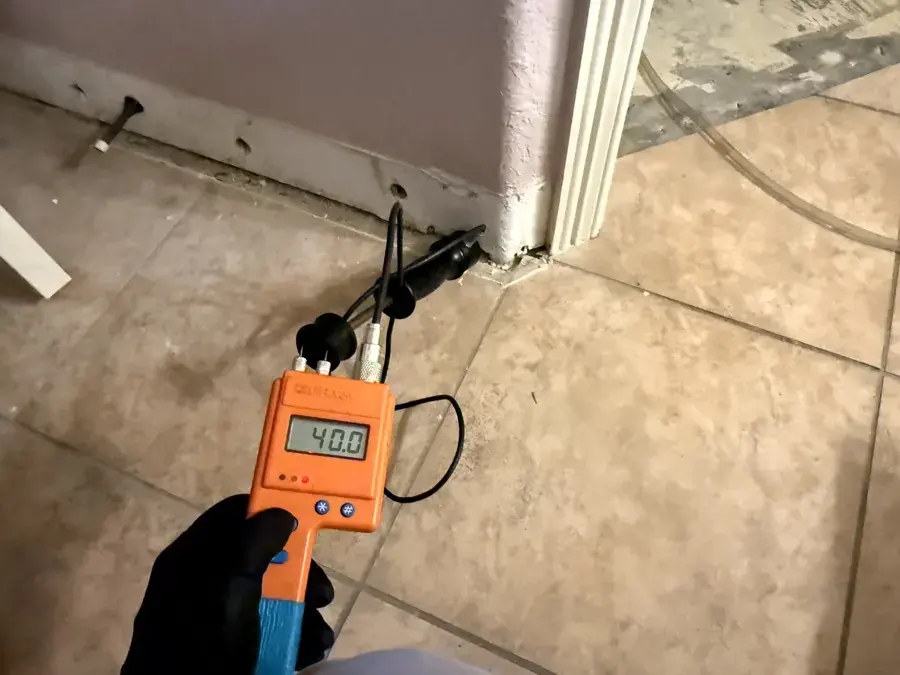
What to do first about structural drying in Haltom City
- Leave walls in place. Do not cut drywall yourself or paint over damp spots. Wet cavities need to be read first, and opening them blindly can spread damage.
- Keep the air moving. Run household fans and the air conditioner if the power is safe, and open interior doors so air reaches closets and wall bases.
- Hold off on repairs. Delay repainting, replacing baseboards or laying new flooring until moisture readings show that the walls and slab are dry.
- Record every stage. Photograph the work as it goes and keep copies of every reading, since the log shows the claim what was wet and when it dried.
Why structural drying matters in Haltom City
Typical Haltom City houses are brick or brick-and-frame ranches on concrete slabs, built mainly in the 1950s to 1970s. After a leak or flood, those walls can hold moisture in cavities and in the bottom plate that rests on the slab.
The median home dates to 1977, and basements are essentially absent in Tarrant County, so water goes into walls and the slab instead of draining below. A floor that feels dry can sit beside a wet cavity.
What does structural drying cost in Haltom City, TX?
Structural drying in Haltom City is priced on the drivers of the North Richland Hills structural drying ranges: how many rooms and walls were wet, which materials hold the water and how many days of equipment it takes to reach the goal. The sooner drying starts, the fewer materials get involved.
One room, drywall only
- Wall bottoms checked and read
- Fans and a dehumidifier
- Short equipment run
Walls and slab involved
- Baseboards removed
- Cavities opened low
- Daily readings kept
Dense or long-wet materials
- Desiccant units added
- Plates and framing dried
- Extended daily monitoring
For a planning range on your own rooms, use the water damage cost calculator. These are typical ranges, never a quote: the category of water, the square footage, the material class and how fast drying started set the real number.
How structural drying is handled in Haltom City
Map every layer
Pinless and probe meters and a thermal camera locate moisture in drywall, plates, studs, insulation and the slab, and the map sets the equipment plan.
Set the drying chamber
The affected area is closed off, air movers are aimed at wet surfaces and LGR dehumidifiers are sized to the room volume and the class of the loss.
Open where needed
Baseboards come off and small holes open low in walls, so dry air can reach cavities and bottom plates that would otherwise stay wet.
Read and adjust daily
Each day the crew records conditions and moves equipment, and drying continues until every material is within 2 to 4 points of a dry reference.
What a drying chamber does
Drying works by balancing air movement, temperature and humidity. A closed chamber lets dehumidifiers pull water out of the air quickly, while air movers push dry air across wet surfaces and into cavities.
The equipment is sized to the room and to the class of the loss, which depends on how many wet materials there are and how slowly they release water. Equipment is checked and moved every day, since a wet zone shrinks and the air flow that fit on day one rarely fits on day three.
- Air movers push air across wet surfaces
- LGR dehumidifiers remove water from the air
- Desiccant units help with dense materials
Walls, plates and slabs
Brick-and-frame walls hide moisture in the bottom plate and the cavity behind the drywall, and the concrete slab beneath can hold water for a long time. Each layer is read separately, because one dry reading does not mean the others are. A wall that reads dry at head height can still be wet at the bottom plate, where water collects and drying is slowest.
Floors that lie on top are covered under hardwood floor water damage in Haltom City.
Why the logs matter
The daily readings show when the structure is dry and give the adjuster a record of what was wet and how long it took, and they protect the owner if a later question comes up about a wall or a floor. Keep every copy, and ask your own insurer how structural drying is handled. For the first step after a leak, see water extraction in Haltom City.
Structural Drying across Haltom City and nearby towns
Structural drying covers ZIP codes 76117, 76137, 76111, 76148 and 76180, including Browning Heights, Broadway Park, Meadow Oaks, Diamond Oaks and North Haltom City, as well as East Belknap and Historic Birdville's older houses.
The same service in nearby towns: Structural Drying in Richland Hills, Structural Drying in Watauga, Structural Drying in Fort Worth.
Related water damage services in Haltom City
Structural Drying questions in Haltom City, TX
What is structural drying?
It is the process of removing moisture from walls, floors, framing and slabs after water damage, using air movers and dehumidifiers and checking readings until the materials reach a dry reference.
How do I know the walls are dry?
Only meters can say. A wall can feel and look dry while the cavity or plate still holds moisture, so readings on each layer are compared with a dry reference in the same house.
Why are small holes cut in the drywall?
They let air and sensors reach cavities and bottom plates. The holes are patched after drying, and they are far cheaper than replacing a wall that dried badly.
How long does drying take?
It depends on the materials and how long they were wet. Drywall and carpet often dry first, while plaster, wood and concrete can take longer. The readings decide the end date.
Is structural drying covered by insurance?
Drying after a sudden loss is usually part of the claim, but wording differs by policy and cause. The daily logs are what an adjuster looks at, so check with your own insurer.
Why are LGR dehumidifiers used?
Low-grain refrigerant units pull more water from the air at lower humidity than standard models, which makes them the usual choice for drying walls and floors under S500 methods.
Structural Drying in Haltom City? Start the dry-out now.
The response team answers 24/7 and sends the closest extraction crew with meters, pumps and drying equipment.
Call (888) 527-9134 now