Structural Drying in Richland Hills, TX
Water that looks gone from a Richland Hills floor can still sit in wall cavities, bottom plates and under flooring for weeks. The drying team places air movers and dehumidifiers from a moisture map and keeps them running until the readings say dry.
(888) 527-9134Walls still damp? Call about drying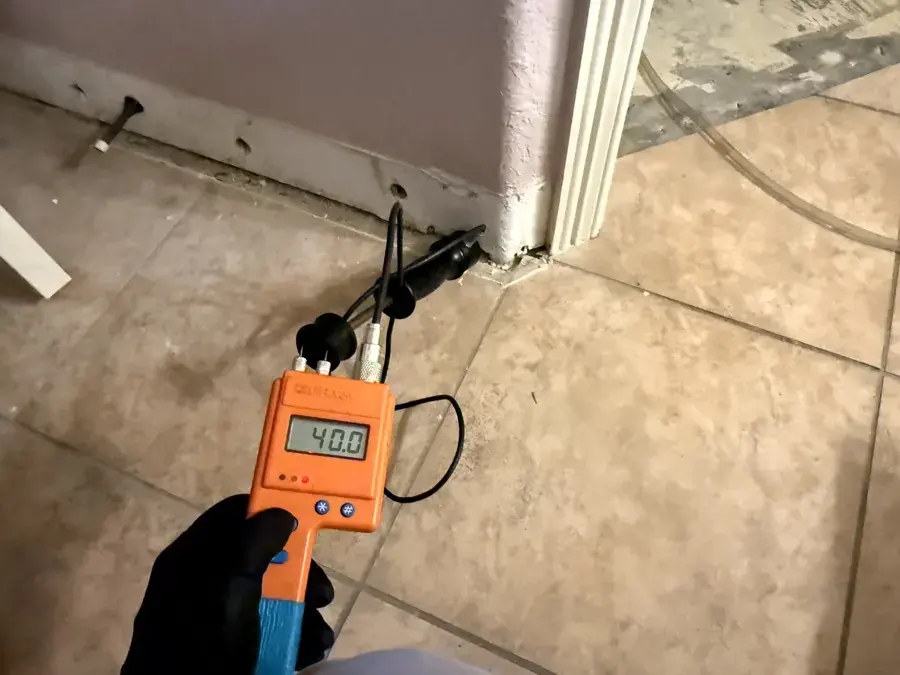
What to do first about structural drying in Richland Hills
- Keep the house cool. Leave the thermostat on a normal setting. Warm air carries moisture, but the dehumidifiers work best when the air conditioning is also running.
- Leave the machines on. Equipment may be loud, but a unit shut off overnight lets the wet materials soak the drying air back up. Ask before moving a unit.
- Keep doors and vents as set. The crew places the equipment in a pattern, and propping doors or closing vents changes how air travels across wet walls.
- Touch nothing wet. Leave wet carpet, drywall and trim for the crew to assess. Moving or removing them yourself can send moisture deeper.
Why surface drying is not enough in Richland Hills
Much of the housing in town dates to the mid-century growth years, and older walls can hold moisture in the cavity long after the paint looks dry. Water follows the framing down to the bottom plate and into the flooring edge.
After a long leak or a creek-flood event like the Big Fossil Creek flooding in 1957, moisture lingers in spots that fans never reach. Drying has to follow the water into the structure, not only dry the room.
What does structural drying cost in Richland Hills, TX?
Drying follows the same drivers as the North Richland Hills structural drying ranges. One room and a handful of machines sits low, while several rooms, dense materials and a long run sits high. The class of the loss and how many materials are dense decide where a job lands among the cards below.
Class 1 or 2, one area
- A few air movers
- One LGR dehumidifier
- Short run, daily readings
Class 3, several rooms
- Wall cavities opened
- Several dehumidifiers
- Daily psychrometric logs
Class 4, dense materials
- Desiccant units or mats
- Hardwood or slab drying
- Extended monitoring
For a planning range on your own rooms, use the water damage cost calculator. These are typical ranges, never a quote: the category of water, the square footage, the material class and how fast drying started set the real number.
How structural drying is handled in Richland Hills
Classify the loss
The crew sets the water category and the class, which says how much of the structure is wet and how hard the materials are to dry.
Place the equipment
Air movers, LGR dehumidifiers and, for dense materials, desiccant units go in a pattern drawn from the moisture map instead of guesswork.
Read every day
Temperature, humidity and moisture readings are logged each visit, and equipment is moved, added or removed to match what the numbers show.
Stop at the goal
Drying ends when wet materials land within 2 to 4 points of a dry reference in the same house, not when a timer runs out.
Class 1 through 4 decide the equipment
Class 1 means a small area and low-absorbing materials, while Class 4 means deep saturation in dense things like hardwood or concrete. The class sets how many air movers and dehumidifiers go in. Class 2 and Class 3 sit between them, with wet walls, carpet and pad over a larger area.
Water category, from clean to contaminated, then decides what stays and what comes out. A hallway of carpet and wall bottoms usually lands in Class 2 or 3.
- Wall cavities and bottom plates
- Subfloors and slab edges
- Cabinet bases and baseboards
Daily readings and the dry reference
A drying job is run by numbers. Each wet material is compared with the same material in a dry part of the house, and equipment stays until the gap closes. Equipment is added or removed as the numbers change.
The daily log is also the record an insurer wants, and it shows why the machines ran as long as they did. Moisture meters and thermal cameras supply the numbers. The slab leak water damage page for Richland Hills shows how dense floors extend the schedule.
When to open a wall
A wall is opened when the readings show water trapped in the cavity, and then only in small, clean cuts. Many walls dry through the surface and are left alone. Coverage varies, so ask your own insurer, and see water extraction in Richland Hills for the step before drying begins. Holes are cut small so patching is simple, and cavities are rechecked before anything is closed.
Structural Drying across Richland Hills and nearby towns
Structural drying covers ZIP 76118 and the part of Richland Hills in 76180, including City Center, the Baker Boulevard corridor, Richland Hills South, the Dreeben Drive area, the Rosebud Park area and the Handley-Ederville Road corridor.
The same service in nearby towns: Structural Drying in Haltom City, Structural Drying in Hurst, Structural Drying in Watauga.
Related water damage services in Richland Hills
Structural Drying questions in Richland Hills, TX
How long does structural drying take?
It depends on the class of the loss, the materials and the weather indoors. The readings decide, and a small clean loss finishes far sooner than a long, deep one. Dense floors and deep leaks run longer.
Why are the machines so loud?
Air movers and dehumidifiers move a lot of air to carry moisture out of walls and floors. The noise is the work, and it ends when the readings reach the goal. A quieter setting is not an option if the air has to move.
Can I turn the equipment off at night?
Please do not. A unit that stops lets wet materials re-humidify the air, which sets the dry-out back and adds a day or more.
What is a dry reference?
A reading taken on the same material in an unaffected part of the same house. Wet materials are dried until they land within 2 to 4 points of it.
Why does the air conditioner need to stay on?
Cool air holds less moisture, and the system helps the dehumidifiers pull water out of the house. A running AC keeps the drying steady.
Is structural drying covered by insurance?
It is commonly part of a covered sudden loss, after the deductible. The daily logs help the insurer see what the drying involved.
Structural Drying in Richland Hills? Start the dry-out now.
The response team answers 24/7 and sends the closest extraction crew with meters, pumps and drying equipment.
Call (888) 527-9134 now