Structural Drying in Hurst, TX
Brick veneer over wood frame can hold water inside wall cavities long after the surface feels dry. The drying team meters slabs, subfloors and wall cavities in Hurst homes, sets air movers and dehumidifiers, and keeps them running until the readings meet the S500 goal.
(888) 527-9134Get the drying equipment set up in Hurst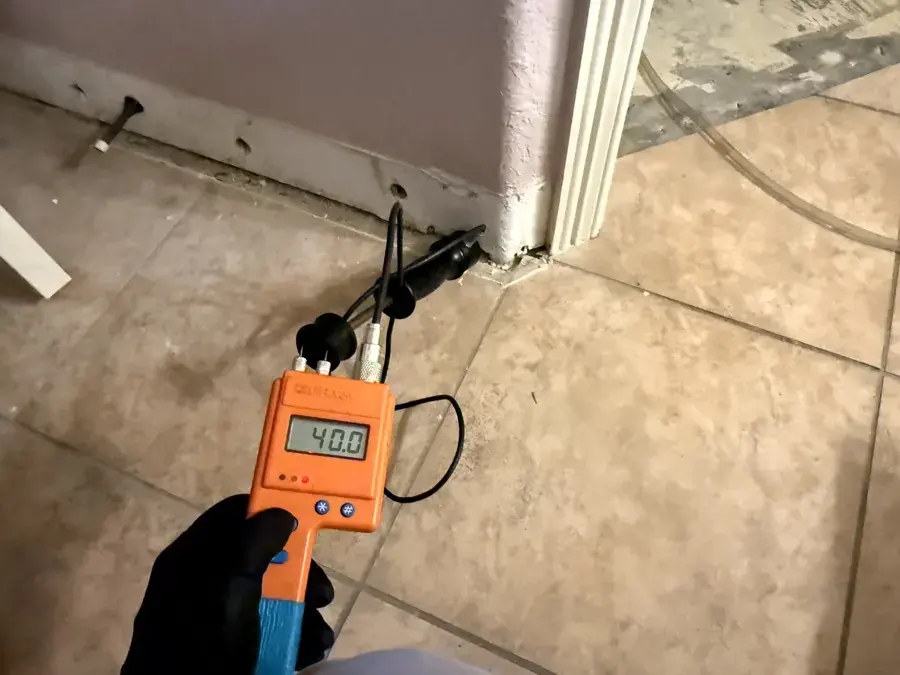
What to do first about structural drying in Hurst
- Keep the house cool. Cool air helps equipment pull moisture. Keep the thermostat steady rather than adding heat, and keep windows closed while dehumidifiers run.
- Leave the equipment on. Machines that seem loud or warm are still working. Turning them off lets moisture creep back into the walls and floor.
- Keep doors and plastic as set. Doors, plastic sheeting and drying chambers are arranged to direct airflow, so avoid changing them without asking the crew.
- Do not empty the equipment yourself. Dehumidifier tanks and drain lines are managed by the team. Call if a unit stops or an alarm sounds.
Why surface drying falls short in Hurst
Brick veneer over wood frame can hold moisture in wall cavities, so slab homes need subfloor and wall-cavity moisture checks after any water event. A wall that feels dry to the touch can still hold water behind the sheathing and at the bottom plate.
Slab foundations also store water, and many houses are over 45 years old. Concrete releases moisture slowly, which is why drying plans for Hurst homes run until meters, not appearances, say the structure matches a dry reference.
What does structural drying cost in Hurst, TX?
Drying jobs in Hurst follow the North Richland Hills structural drying ranges. The class of material and the number of rooms drive the price, with dense slabs and long-wet cavities needing more equipment and more days than a quick surface dry. Adding desiccant units for dense materials raises the cost further.
Class 1 or 2, one area
- Light equipment set
- Meters mapped the area
- Short readings window
Class 3, several rooms
- Air movers per room
- Dehumidifier capacity
- Daily logs
Class 4, dense materials
- Desiccant or mat drying
- Wall cavities opened
- Longer equipment stay
For a planning range on your own rooms, use the water damage cost calculator. These are typical ranges, never a quote: the category of water, the square footage, the material class and how fast drying started set the real number.
How structural drying is handled in Hurst
Class the loss
The crew measures how much water the structure holds and how fast it will evaporate, which sets the class and the equipment count.
Set the equipment
Air movers go at floor level in each wet room, LGR dehumidifiers go in each drying zone, and desiccant units or mats are added for dense materials.
Read every day
Moisture meters and psychrometric readings are logged daily on floors, subfloors and wall bottoms, and equipment is moved as zones dry.
Release on readings
Equipment comes out only when the structure matches a dry reference, within 2 to 4 points, and the final readings go into the file.
Class 1 through 4 decides the equipment
Class 1 means little moisture and low evaporation, while Class 4 covers dense materials like concrete and thick framing that hold water deeply. The higher the class, the more dehumidification and the more time the structure needs. Choosing the right class on day one prevents extra days later.
A slab-on-grade home can move between classes inside the same house. Carpet and drywall dry quickly, but the slab beneath and the wall bottoms hold on.
- Class 1 and 2 for light wetting in one room
- Class 3 when water came from above or several rooms are wet
- Class 4 for slabs, plaster and dense framing
Daily readings and the drying goal
Readings are taken every day, and equipment is moved as the wet areas shrink. The goal is a structure within 2 to 4 points of the same material in an unaffected room.
That reference comes from a dry room of the same house, since building materials differ. The equipment leaves when the numbers say so, not when a date passes. A final set of readings closes the file.
When to open a wall
Small holes at the bottom of a wall let air and instruments reach the cavity. If insulation is wet or the water was contaminated, the section comes out. Otherwise walls are dried in place. For examples, see slab leak water damage and water extraction. A thermal camera can help choose where the first opening goes.
Structural Drying across Hurst and nearby towns
Structural drying covers all of Hurst, ZIP codes 76053, 76054 and 76180, from the older ranch blocks near Mid-Cities Boulevard to the Prestonwood Estates, Heatherwood Estates and Bellaire Park subdivisions and the townhome communities.
The same service in nearby towns: Structural Drying in Bedford, Structural Drying in Richland Hills, Structural Drying in Colleyville.
Related water damage services in Hurst
Structural Drying questions in Hurst, TX
What does structural drying mean?
It is the process of drying a building's frame, subfloor, slab and walls with air movers and dehumidifiers after water gets in, using meter readings to know when each material is dry.
Why does a Hurst home need cavity checks?
Brick veneer over wood frame can hold moisture in wall cavities, so a wall that feels dry may not be. Meters and small openings at the base show what is inside.
How long does drying take?
A contained loss on carpet and drywall often finishes in three to five days. Slabs, hardwood and long-wet walls take longer, and the equipment leaves when the readings match a dry reference.
Why are the machines so loud?
Air movers and dehumidifiers run continuously to push and pull moisture out of the structure. The noise is a sign that drying is working, and the units come out as soon as the readings allow.
Can I turn the equipment off at night?
It is best not to. Turning machines off lets moisture return to the materials and adds days. If the noise is a problem, ask the crew to adjust the setup instead.
Does insurance cover structural drying?
Drying after a sudden water loss is usually part of the covered claim. The daily readings are what show the adjuster the work was needed. Check with your own insurer, since policies differ.
Structural Drying in Hurst? Start the dry-out now.
The response team answers 24/7 and sends the closest extraction crew with meters, pumps and drying equipment.
Call (888) 527-9134 now