Structural Drying in Colleyville, TX
Large Colleyville homes hold a lot of material that can stay wet after the visible water is gone, from wall cavities to subfloors and framing. The drying team places equipment by the IICRC S500 classes, checks readings daily and stops only when the numbers reach the dry reference.
(888) 527-9134Walls still damp after the water stopped? Call to dry them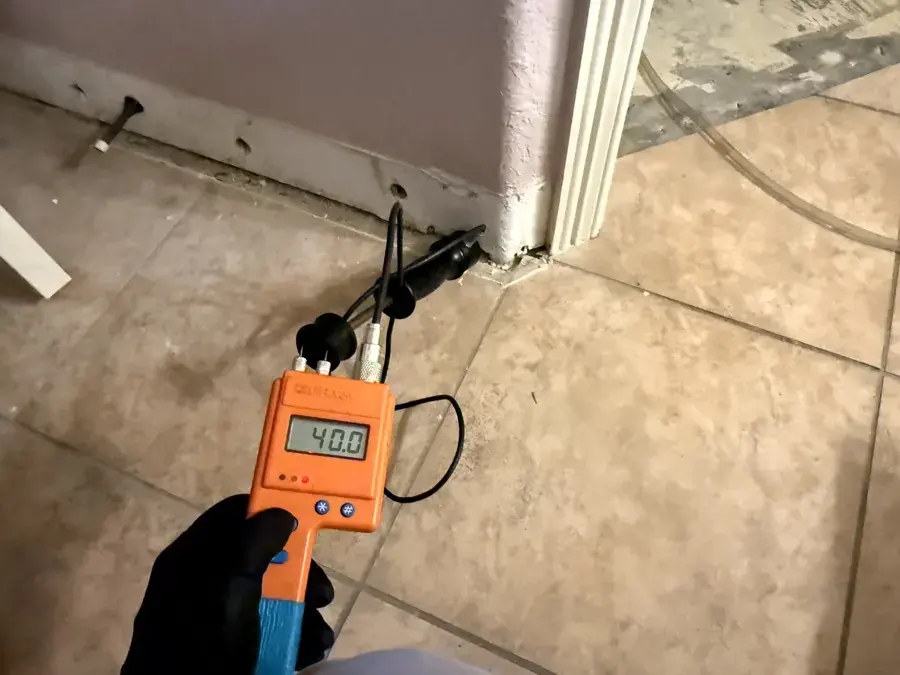
What to do first about structural drying in Colleyville
- Stop new water. Fix or shut off the source first, since drying equipment cannot catch up with a leak that is still running and adding water.
- Keep the house closed. Close windows and exterior doors in the wet area so humid outdoor air does not undo the drying work.
- Leave equipment running. Once machines are set, keep them on and unobstructed. Moving or switching them off sends readings backward.
- Save every record. Keep the moisture map, dated photos and the daily numbers, because they show when and how drying reached the goal.
Why surface drying falls short in big homes
Large two-story brick and stone houses have deep wall cavities, thick framing and big subfloor areas. A wall can feel dry on the surface while the studs and insulation inside still hold water that later causes swelling or odor.
With a median owner-occupied home value of about $784,900 across the city, a thorough dry-out and clear records protect a valuable asset. Surface-only drying can leave a damp cavity behind. Thorough drying also supports an insurance file that shows exactly when each material reached the goal and why equipment stayed on as long as it did.
What does structural drying cost in Colleyville, TX?
A Colleyville structural drying job is priced on the drivers behind the North Richland Hills structural drying ranges. Square footage, material class and the number of days equipment runs decide the total, and a dense or large loss sits at the high end.
One room, light materials
- Moisture map and equipment
- Baseboards removed
- Short run with readings
Several rooms or wall cavities
- Cavities opened where wet
- More dehumidifiers running
- Daily logs kept
Dense materials, large loss
- Desiccant units added
- Framing and slab dried
- Extended monitoring period
For a planning range on your own rooms, use the water damage cost calculator. These are typical ranges, never a quote: the category of water, the square footage, the material class and how fast drying started set the real number.
How structural drying is handled in Colleyville
Map the moisture
Meters and thermal imaging draw the wet edge across floors, walls and ceilings, and the readings set the class of the loss and the equipment needed.
Size the equipment
Air movers, LGR dehumidifiers and, for dense materials, desiccant units are placed by room volume and material under the S500 classes.
Open what must be opened
Baseboards come off, small holes go into wet drywall, and sections are removed only where airflow cannot reach the moisture inside.
Read daily to the goal
Temperature, humidity and moisture are logged each visit, and equipment is adjusted until every material is within two to four points of a dry reference.
How the loss class sets the equipment
The S500 standard sorts losses into classes by how much material is wet and how slowly it releases water. Carpet and drywall dry quickly, while concrete, thick framing and layered floors need more time and often desiccant units.
Choosing the class correctly matters, because too little equipment drags the job out and too much wastes power without drying faster. Large rooms and tall ceilings in bigger houses also change the air volume to be dried, so the numbers differ from a small home.
- Class 1 for small areas with little wet material
- Class 3 for water that came from above
- Class 4 for dense materials that hold water
Daily readings and the drying goal
Equipment comes out when the readings say so, not on a date. The goal is to bring each wet material within two to four points of the same material in a dry part of the house, which gives a fair reference.
Daily logs also show a stalled area early, so machines can be moved before a slow wall holds up the whole job, and a stubborn corner or closet gets extra airflow rather than a longer wait. See water extraction for how a dry-out begins.
When to open a wall
A wall is opened only when readings show moisture that airflow cannot reach, such as insulation in a cavity or a bottom plate that stays wet. Opening one section can save the rest of the wall, and the opening is made as small as the job allows. The Colleyville water damage overview lists the services that lead to drying, and your own insurer can say how the work is covered.
Structural Drying across Colleyville and nearby towns
The drying team serves ZIP code 76034, from the large homes of Plymouth Hills, Mill Creek, Brook Meadows and Colleyville Estates to businesses near Town Center Colleyville and along Colleyville Boulevard and Heritage Avenue.
The same service in nearby towns: Structural Drying in Bedford, Structural Drying in Hurst, Structural Drying in Euless.
Related water damage services in Colleyville
Structural Drying questions in Colleyville, TX
Why can a wall feel dry and still be wet?
The surface of drywall can dry quickly while studs, insulation and the bottom plate inside stay damp. Meters read what the hand cannot, which is why readings, not touch, decide, and why a wall that feels fine can still be on the list.
How does the crew know when drying is done?
Each material is metered until it lands within two to four points of the same material in a dry part of the house. Equipment stays on until that happens, not for a set number of days.
What are desiccant units for?
They pull moisture from air and dense materials that standard dehumidifiers dry slowly, such as concrete and thick framing. They are added when readings show a layer lagging behind.
Will the walls have to be torn out?
Not usually. Small holes and removed baseboards often give airflow, and sections come out only when insulation or drywall cannot dry in place.
Why keep the house closed during drying?
Open windows let humid air in, which the dehumidifiers then have to remove. A closed space dries faster and lets the readings drop in a predictable way, which keeps the job on track.
Does insurance cover structural drying?
Drying after a sudden covered loss is usually part of the claim after the deductible. Daily logs and photos help, and your own insurer confirms what applies.
Structural Drying in Colleyville? Start the dry-out now.
The response team answers 24/7 and sends the closest extraction crew with meters, pumps and drying equipment.
Call (888) 527-9134 now