Structural Drying in Bedford, TX
Surface-dry is not dry. In a Bedford brick-and-frame house on slab, water hides in wall cavities, bottom plates and the concrete itself. The crew sets equipment by the class of loss and logs readings daily until the structure meets the S500 goal.
(888) 527-9134Walls still damp after a leak? Start drying today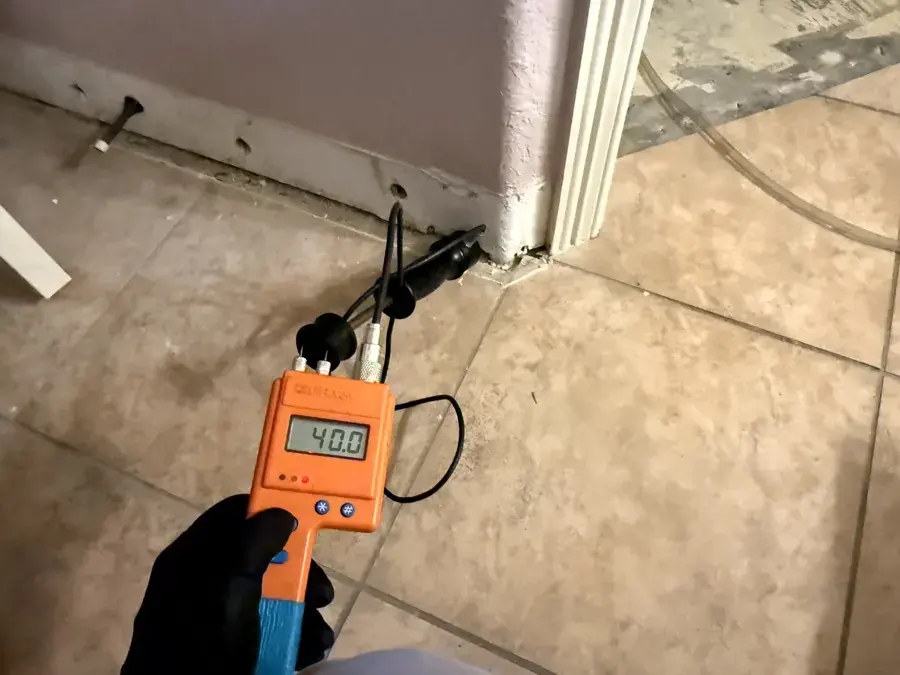
What to do first about structural drying in Bedford
- Keep the house cool. A cool, closed house lets dehumidifiers work. Avoid opening windows on humid days, since that lets moisture back in.
- Leave the equipment running. Machines are sized to the loss. Turning them off early leaves moisture in framing, and it can come back as odor or damage.
- Keep doors and panels as set. Equipment placement and opened baseboards are deliberate. Leave them as they are until readings say the area is dry.
- Do not move wet items back. Keep rugs and furniture out of drying rooms until the crew confirms the floor and walls have reached the goal.
Why surface drying is not enough here
Brick-and-frame houses on slab have wall cavities, bottom plates and concrete that all hold water after a leak. These stay wet long after carpet and paint look dry, and a house that is 40 to 55 years old may hide layers from earlier repairs.
Bedford summers are hot and humid, and humid air slows evaporation, so more dehumidifier capacity and longer runs may be needed. Without readings, a wall can look fine while its framing still holds water.
What does structural drying cost in Bedford, TX?
Structural drying in Bedford follows the drivers in the North Richland Hills structural drying ranges: the class of materials, how many rooms need equipment and how many days the readings take to reach the goal. A small Class 2 area sits low, and dense materials sit high.
Class 1 or 2, one area
- Air movers and one dehumidifier
- Daily readings logged
- Short equipment run
Class 3, several rooms
- Extra dehumidifiers added
- Wall cavities opened low
- Longer equipment run
Class 4, dense materials
- Desiccant units on site
- Mat systems on dense floors
- Extended monitoring
For a planning range on your own rooms, use the water damage cost calculator. These are typical ranges, never a quote: the category of water, the square footage, the material class and how fast drying started set the real number.
How structural drying is handled in Bedford
Classify the loss
The crew identifies the water category and the class of the loss, which depends on how much of the room is wet and how dense the materials are, to size the equipment.
Place air and dehumidifying
Air movers are set for each room's evaporation load, and LGR dehumidifiers pull the moisture out of the air, with desiccant units added for dense or cold areas.
Open what must breathe
Baseboards come off and small holes are cut low in wet walls so air can reach the cavity, which keeps demolition to a minimum.
Log until dry
Temperature, humidity and moisture content are recorded every day, and equipment is removed only when the structure reads within the goal.
Class 1 through 4 decide the equipment
Class 1 involves little wet material, while Class 4 covers dense materials such as concrete, hardwood and plaster that hold water deep inside. The higher the class, the slower the water leaves. Plaster and hardwood are slower still.
The class tells the crew how much airflow and dehumidifying is needed, so the equipment fits the loss and does not run longer than necessary. It also sets how many machines a room gets.
- Class 1 and 2 for carpet and drywall
- Class 3 for ceilings and wet walls
- Class 4 for slab and dense floors
Daily readings and the drying goal
A reading is only meaningful against a dry reference taken in an unaffected part of the same house. Wet materials are done when they come within 2 to 4 points of it, and each material is judged on its own.
Daily logs show adjusters the drying progress, and they let the crew move equipment as wet zones shrink. For slab concerns, see slab leak water damage.
When to open a wall
Walls are opened when readings show water inside that cannot be dried through small holes, when insulation behind them is wet or when the water was Category 3. Otherwise walls are dried in place, which keeps demolition and repair cost down. Keep the logs with your claim, check your policy with your insurer, and see water damage restoration in Bedford for the rest.
Structural Drying across Bedford and nearby towns
Structural drying covers Bedford ZIP codes 76021, 76022 and 76095, from Forest Ridge and Central Bedford to Harwood Oaks, Stonegate, Bell Manor and the Central Drive apartment corridor near the Airport Freeway. Homes and rentals alike are covered.
The same service in nearby towns: Structural Drying in Hurst, Structural Drying in Colleyville, Structural Drying in Euless.
Related water damage services in Bedford
Structural Drying questions in Bedford, TX
What is IICRC S500?
It is the industry standard for water damage restoration. It sets how water is categorized, how the class of a loss sizes the equipment and what dry means, so everyone works from the same definitions.
How long does structural drying take?
It depends on the class, the materials and the weather. Readings decide when equipment leaves, not a fixed number of days, and humid Bedford summers can stretch the schedule.
Why is the equipment so loud?
Air movers and dehumidifiers move a lot of air. Keep it running, since turning it off early can leave moisture in the framing, where it may come back as odor or damage.
Will my electric bill rise?
Equipment uses electricity, and the drying log can help support a claim for that. Ask your insurer how it handles the added power use during a dry-out.
Do walls always have to come open?
No. Many walls dry in place through small holes at the base. Open walls are for wet insulation, trapped water or Category 3 water, and the readings make that call.
Is structural drying covered by insurance?
Drying after a sudden leak is often covered after the deductible. Coverage varies by policy, so check yours and keep the daily logs together for the adjuster, since they show how and when the structure reached the goal.
Structural Drying in Bedford? Start the dry-out now.
The response team answers 24/7 and sends the closest extraction crew with meters, pumps and drying equipment.
Call (888) 527-9134 now