Structural Drying in Saginaw, TX
Brick or stone veneer frame walls on a slab hold moisture in the cavity and at the bottom plate long after the surface looks dry. The drying team reads walls, baseboards and concrete with meters and runs equipment until every reading reaches the S500 goal.
(888) 527-9134Walls still damp after the cleanup? Call about drying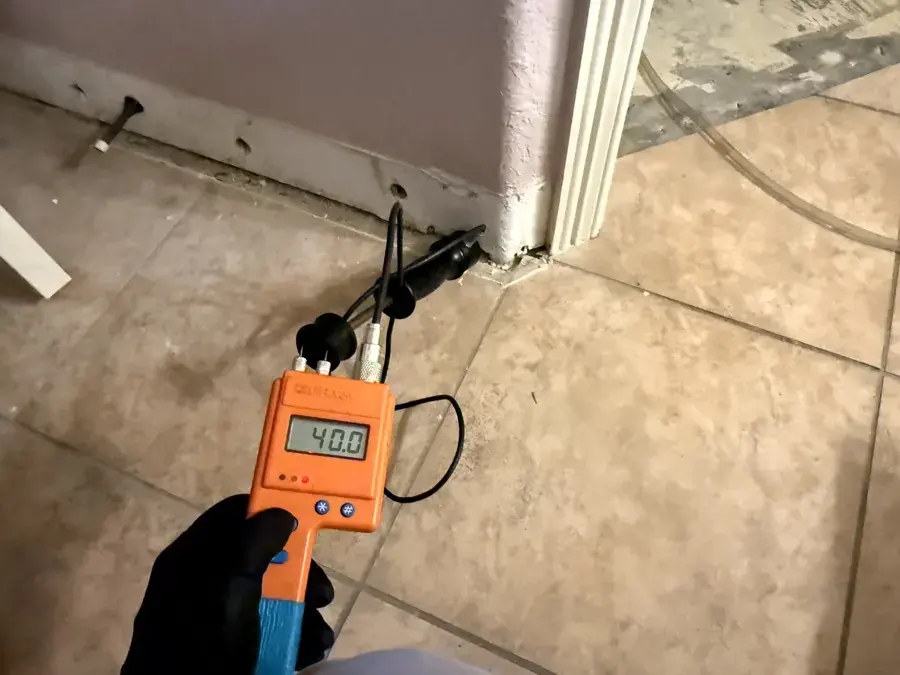
What to do first about structural drying in Saginaw
- Stop the source. Shut off the water or fix the leak first. Drying a wall while water still feeds it only keeps the cavity wet.
- Run the air. Keep the air conditioner on and open interior doors so air moves through the house, which helps surface drying while help is on the way.
- Leave walls closed. Do not drill, patch or paint a wet wall. Sealing moisture in is what turns a repairable wall into a bigger problem.
- Photograph stains and swelling. Capture damp baseboards, bubbling paint and swollen trim with dates. These show where moisture started and how far it moved.
Why Saginaw walls hold moisture
Newer Saginaw subdivisions mostly have single-story and two-story frame houses with brick or stone veneer on slab foundations. Veneer leaves a small gap behind it, and water that gets in can sit there, against framing and bottom plates, out of view.
Slabs add another path. Concrete wicks water upward into the plates and drywall bottoms, and it releases moisture slowly, so drying includes wall cavities, baseboards and the slab itself instead of the surface alone, which is why the schedule runs longer than people expect.
What does structural drying cost in Saginaw, TX?
Drying follows the drivers behind the North Richland Hills structural drying ranges: how much framing and slab got wet, how dense those materials are and how long equipment must run. A single wall bottom sits low; whole-house drying through veneer and slab sits high.
One wall, quick catch
- Meter map of the wall
- Baseboards off for air
- Fans and one dehumidifier
Several rooms of walls
- Small flood cuts low
- Plates and studs dried
- Daily readings
Veneer, slab and plates
- Cavity airflow through veneer
- Desiccant or mats on slab
- Longer equipment run
For a planning range on your own rooms, use the water damage cost calculator. These are typical ranges, never a quote: the category of water, the square footage, the material class and how fast drying started set the real number.
How structural drying is handled in Saginaw
Map the moisture
Pinless and probe meters read drywall, baseboards, plates and concrete across the house, and a thermal camera shows cool patches where water is still sitting inside the walls.
Open for airflow
Baseboards and toe-kicks come off, and small flood cuts go in only where meters read wet, so dry air can reach the cavity behind veneer and the bottom plate.
Place the equipment
Air movers push air along wall bottoms and into cavities, LGR dehumidifiers pull the water from the air, and desiccant units or mats work on dense concrete.
Prove the dry
Each material is read daily against a dry sample from the same house, and equipment is removed only once framing, drywall and slab all reach that reference.
Why surface dry is not dry
Paint and drywall can feel dry while the plate behind them is still wet. Moisture moves slowly from dense materials to the air, so a wall that looks fine can hold water for a long time.
That hidden moisture is the reason meters matter. They read inside the material, which is where problems start if the structure is closed up too early.
Water also moves upward, a process called wicking, so a wall that was only splashed at the bottom can read wet a foot or more above the floor.
- Baseboards that swell or peel
- Bottom plates and studs behind veneer
- Concrete along wall edges
Drying brick and stone veneer walls
Veneer walls cannot be opened from outside without major work, so the drying happens from inside. Baseboards come off, and small openings low in the drywall let air through the cavity and across the plate.
Dehumidifiers matter most here, because pushing wet air out of a closed house helps little. Lowering the humidity inside draws moisture out of the framing and keeps it out.
The goal is a measurable one, not a feeling of dryness. Every reading is compared with the same material in a dry room of the house.
Slabs, readings and the claim file
Concrete is the slowest material to dry, which sets the pace of any slab-home job. The same logic applies to slab leak water damage, and to wood floors in hardwood floor water damage. Daily readings are logged for the claim file, and your own insurer decides coverage.
Equipment removal is the last step, and it happens only after the readings are logged and reviewed.
Structural Drying across Saginaw and nearby towns
Structural drying covers ZIP codes 76179 and 76131, including newer veneer-wall subdivisions such as the Villages of Eagle Mountain, Willow Creek Estates, Highland Station and Creekwood, as well as older homes in Rancho North.
The same service in nearby towns: Structural Drying in Fort Worth, Structural Drying in Haltom City, Structural Drying in Watauga.
Related water damage services in Saginaw
Structural Drying questions in Saginaw, TX
How do I know the walls are really dry?
Meters read inside the drywall, plate and studs and compare them with a dry sample from the same house. When every reading matches, the wall is dry, however it looks or feels.
Do brick veneer walls dry slower?
Often, because moisture can sit in the gap behind the veneer and against the bottom plate. Drying happens from inside through baseboard removal and small low openings, with dehumidifiers pulling humidity down.
Will walls have to be cut open?
Only where meters read wet and airflow alone cannot reach. Small flood cuts low on the wall are typical, and the cut sections are patched after framing and plates read dry.
Why does the slab matter for wall drying?
Concrete wicks water upward into the plates and drywall bottoms, and it releases moisture slowly. If the slab stays wet, walls can pick moisture back up after the equipment is gone.
How long will equipment run?
It runs until readings reach the goal, which depends on the materials and how long they were wet. Clean-water drywall dries sooner than framing and concrete, so the slowest material sets the finish.
Does insurance pay for drying?
Drying after a sudden covered loss is usually part of the claim, while slow leaks may be treated differently. Your own insurer decides, and the daily readings are the proof it was done.
Structural Drying in Saginaw? Start the dry-out now.
The response team answers 24/7 and sends the closest extraction crew with meters, pumps and drying equipment.
Call (888) 527-9134 now