Structural Drying in Keller, TX
Pulling out standing water is only the first half of a Keller dry-out. Wet framing, wall cavities, flooring and slab still hold moisture that drywall paint hides. Structural drying places the equipment, logs the numbers daily and keeps going until every material reads dry.
(888) 527-9134Walls damp after a leak? Call to dry them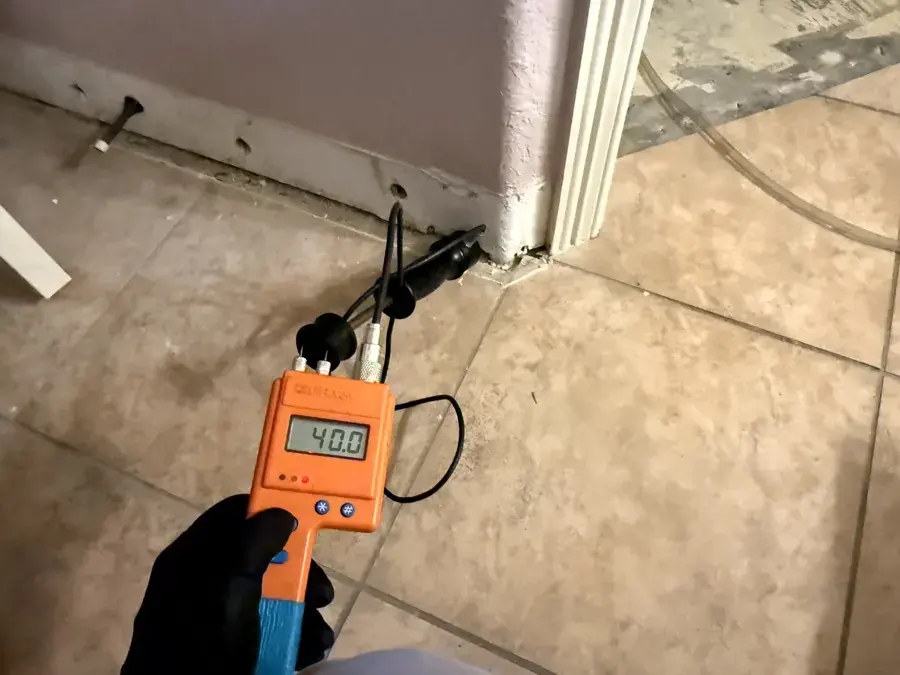
What to do first about structural drying in Keller
- Keep the house cool. Heat speeds up moisture release in the air, so keep the thermostat down while equipment runs and the dehumidifiers can work well.
- Leave the equipment on. Do not switch off air movers or dehumidifiers to save on noise. Stopping early lets walls and slab hold moisture.
- Keep doors and panels as set. Closed doors and opened wall panels are part of the plan. Move equipment only if the crew says so.
- Report anything new. Call about new stains, musty smells or damp spots, since they can mean the wet area is larger than mapped.
Why Keller walls need real drying
Keller homes are wood frame with brick or stone veneer on slab. After a leak, water soaks baseboards, wall bottoms and flooring, then wicks upward into the framing and insulation behind the drywall, where it can sit unseen and slowly spread.
The climate is humid subtropical, with about 33.6 inches of rain per year and summers that often top 100 F. Humid air slows drying, so dehumidifiers matter as much as airflow, and the house is kept closed while the equipment runs.
What does structural drying cost in Keller, TX?
Structural drying in Keller follows the drivers behind the North Richland Hills structural drying ranges. A small contained loss dried in a few rooms sits low, while a long-wet house with dense materials and many rooms sits high, and the equipment count and monitoring days drive that spread.
One or two rooms
- Equipment set and monitored
- Daily readings logged
- Short drying period
Whole floor, wet walls
- Cavities opened where needed
- More dehumidifiers running
- Slab and wall readings
Dense or long-wet materials
- Desiccant dehumidifiers used
- Mats on flooring
- Extended monitoring visits
For a planning range on your own rooms, use the water damage cost calculator. These are typical ranges, never a quote: the category of water, the square footage, the material class and how fast drying started set the real number.
How structural drying is handled in Keller
Classify the materials
The loss is sorted by how much water the materials hold, from Class 1 to Class 4, which decides how many air movers and dehumidifiers go in each room.
Place the equipment
Air movers push air across wet surfaces and into cavities, while LGR and desiccant dehumidifiers remove the moisture those surfaces release.
Take daily readings
Temperature, humidity and moisture content are logged for each material every visit, and equipment is moved as the wet zones get smaller.
Reach the goal
Drying is done when wet materials read close to the same material in an unaffected part of the house, then the equipment is removed.
Class 1 through 4 decide the equipment
A small spill on low-absorbency materials is Class 1, while water soaking carpet and pad is Class 2. Class 3 is water from above that wets ceilings and walls, and Class 4 covers dense materials like slab and hardwood that hold water deep.
Dense classes need desiccant dehumidifiers or mat systems, which draw moisture from deep layers that normal airflow cannot reach. That is why concrete and wood often finish drying last, well after the drywall around them.
- Wall framing and sill plates
- Flooring and the slab below it
- Cabinet bases and wall cavities
Daily readings and the drying goal
Readings, not dates, decide when drying ends. Each day the crew records conditions and moisture in each material, then compares the numbers with a dry reference in the same house.
The goal is to bring wet materials within a few points of that reference, material by material. For wood flooring on slabs, see hardwood floor water damage in Keller, where mats are used on the boards, and the slab is read as well.
When to open a wall
A wall is opened only when readings show water inside it that airflow cannot reach, usually along the bottom of drywall or behind cabinets. Small openings keep the repair small, and the logs show why each one was needed. Insurers ask for those logs, so check coverage with your own insurer. For the earlier step, see water extraction.
Structural Drying across Keller and nearby towns
Structural drying covers Keller ZIP 76248 and ZIP 76244, including Hidden Lakes, Chase Oaks, Highland Oaks, Westbury Estates, Fall Creek Estates, the Heritage neighborhood and homes near Bear Creek Park and Keller Town Center.
The same service in nearby towns: Structural Drying in Watauga, Structural Drying in Colleyville, Structural Drying in Hurst.
Related water damage services in Keller
Structural Drying questions in Keller, TX
Why do walls need drying if they look fine?
Paint and drywall can look dry while the framing and insulation behind them stay wet. Moisture meters and thermal imaging find that hidden water, and drying continues until the readings agree across the whole wall.
How long does structural drying take?
The time depends on how much water got in and what it soaked. Light, clean-water losses dry sooner, while dense materials and long leaks take longer. The readings, not a set number of days, decide.
Why is the equipment so loud?
Air movers and dehumidifiers run constantly to push and pull moisture from walls and floors. The noise is temporary, and switching units off early leaves moisture inside the structure.
Will the walls have to be cut open?
Only where readings show water that cannot dry in place. Small openings at the bottom of walls or behind cabinets are common, and many walls stay intact.
What is the S500 standard?
IICRC S500 is the industry standard for water damage restoration. It sets how losses are classified and how drying is verified, and it is the reference this work follows.
Are drying logs useful for insurance?
Yes. Daily readings, equipment lists and photos show an adjuster what was wet and how it was dried. Ask your insurer which documents it wants before work begins.
Structural Drying in Keller? Start the dry-out now.
The response team answers 24/7 and sends the closest extraction crew with meters, pumps and drying equipment.
Call (888) 527-9134 now