Ceiling Leak Water Damage Restoration in Keller, TX
A brown stain on a Keller ceiling means water has already crossed insulation and drywall, and may still be moving. The crew finds the source path, opens only the sagging or soaked sections, extracts what pooled and dries the cavity from above to the floor.
(888) 527-9134Stain spreading overhead? Call before it sags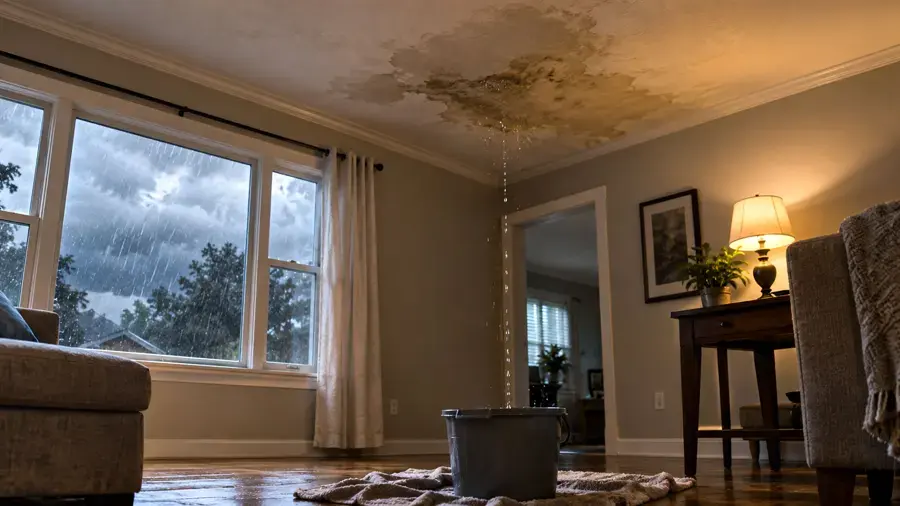
What to do first about ceiling leak water damage in Keller
- Keep clear of a sag. A bulging ceiling may hold a lot of water. Stay out from under it and move people, pets and furniture to another room.
- Stop the source if you can. If the leak comes from plumbing above, close the valve for that fixture or the main. For a roof leak, put buckets under the drips.
- Avoid wet light fixtures. Do not switch on lights or fans in a wet ceiling, and use the breaker only from a dry spot, since water and wiring share the cavity.
- Photograph and mark the edge. Take pictures of the stain, then outline its edge with a pencil and note the time so growth can be tracked.
Where ceiling leaks start in Keller
Keller is in the North Texas hail belt. On April 29, 2021 the National Weather Service received hail reports up to 3.25 inches in the city, and residents reported punctured roofs, broken windows and damaged gutters that led to water entering interiors.
Ceilings also stain from attic supply pipes, drain pans and from fixtures above them. With about 88.3% of Keller homes single-family and detached, a stain is often the only warning before insulation and drywall are already soaked.
What does ceiling leak water damage cost in Keller, TX?
Ceiling work in Keller is priced on the drivers behind the North Richland Hills ceiling leak ranges. A small stain over dry insulation sits low, while a collapsed section with wet attic insulation and soaked flooring below it sits high, so scope drives the figure.
One stained patch
- Source traced and mapped
- Small section of drywall opened
- Air movers on the cavity
Sagging ceiling, wet room
- Wet insulation removed
- Drywall cut above the wet line
- Carpet and pad dried
Several rooms affected
- Large ceiling sections removed
- Flooring below dried or lifted
- Extended structural drying
For a planning range on your own rooms, use the water damage cost calculator. These are typical ranges, never a quote: the category of water, the square footage, the material class and how fast drying started set the real number.
How ceiling leak water damage is handled in Keller
Trace the path
Thermal imaging and meters follow the water from the stain back along joists and across the attic floor, since the entry point is rarely above the stain.
Release trapped water
A small hole at the low point of a sag drains the pooled water in a controlled way, then soaked drywall and insulation are cut out.
Dry the cavity from both sides
Air movers push air across the opened ceiling while dehumidifiers manage the room, and the attic side is dried when it is wet.
Confirm dryness
Readings on joists, remaining drywall and the floor below are logged until each is back to a dry reference level.
Why a ceiling cannot simply air dry
Drywall hides insulation that acts like a sponge. Wet batts press against the back of the ceiling, keep it damp and carry water sideways to a spot far from the first stain, so a small mark can be a large wet area.
Wiring, recessed fixtures and fans share that cavity, which is why a sagging ceiling is both a drying problem and a safety problem until the water is out and the circuits are confirmed dry.
- Wet insulation pressed against the drywall
- Joists holding moisture above the paint
- Fixtures and wiring in the cavity
Roof, attic pipe or fixture above?
The stain alone does not say which source caused it. A leak only after storms points to the roof, a steady drip points to a pipe and a stain below a bathroom points to a fixture, and a roofer or plumber confirms it.
Hail on composition shingle roofs is the main local roof risk, covered in roof leak water damage in Keller. Pipes in attics that froze in February 2021 are covered under burst pipe water damage.
Documenting a ceiling claim
Adjusters want photos of the stain before it is cut, the date of the storm or failure, the moisture readings and the roofer's or plumber's report. Rain through a punctured roof and a failed pipe can be treated differently, so confirm coverage with your own insurer before repairs begin, and keep every receipt.
Ceiling Leak Water Damage across Keller and nearby towns
Ceiling leak calls come from Keller ZIP 76248 and ZIP 76244, including Chase Oaks, the Heritage neighborhood, Keller Crossing, the Estancia and homes on the streets around Keller Town Center and Old Town Keller.
The same service in nearby towns: Ceiling Leak Water Damage in Watauga, Ceiling Leak Water Damage in Colleyville, Ceiling Leak Water Damage in Hurst.
Related water damage services in Keller
Ceiling Leak Water Damage questions in Keller, TX
What causes a ceiling stain in a Keller home?
The main causes are a hail-damaged or worn roof, an attic supply pipe, an air conditioner drain pan and a fixture upstairs. The pattern, timing and location of the stain narrow it down.
Is a sagging ceiling dangerous?
It can be. Wet drywall is heavy and can drop, and wiring sits in the same cavity. Keep clear, avoid switching on fixtures and have the water released in a controlled way.
Does the whole ceiling need to be replaced?
Rarely. Only the wet or sagging sections are removed, and the surrounding drywall can usually be dried and kept once readings confirm it is dry.
Will insulation have to be removed?
Wet insulation is normally removed because it stays damp and keeps wetting the drywall. Dry insulation nearby can stay, and the attic is dried if water spread across it.
Who fixes the leak source?
A roofer repairs roof openings, a plumber repairs pipes and an HVAC technician handles drain pans. The drying team handles the water that already entered the ceilings, walls and floors.
Is a ceiling leak covered by insurance?
Water from a sudden event such as hail damage or a burst pipe is often covered after the deductible, while slow seepage may not be. Share photos and drying logs with the adjuster.
Ceiling Leak Water Damage in Keller? Start the dry-out now.
The response team answers 24/7 and sends the closest extraction crew with meters, pumps and drying equipment.
Call (888) 527-9134 now