Ceiling Leak Water Damage Restoration in Hurst, TX
In a one-story brick ranch, a ceiling stain can come from the roof, the attic or the HVAC, and each source calls for a different fix. The restoration team traces where the water entered, removes what is saturated and dries the ceiling cavity before the stain spreads.
(888) 527-9134Stain growing overhead? Call before it sags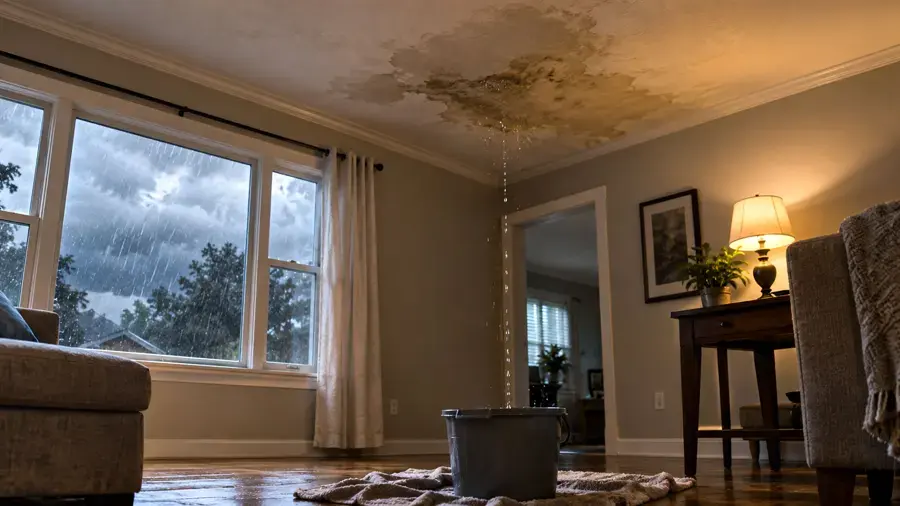
What to do first about ceiling leak water damage in Hurst
- Keep clear of any bulge. A swollen or sagging ceiling can drop its load of water and drywall at once, so move people and furniture out from under it.
- Stop what you can. If the source is plumbing, close the valve. If it is the roof or an air handler, shut the system off and note when the dripping began.
- Leave light fixtures off. Water pooled in a fixture can reach wiring, so switch off the circuit from a dry panel and never touch a wet fixture.
- Catch, photograph, call. Set out buckets, photograph the stain from several angles, then call before the insulation above it soaks through.
Where Hurst ceiling leaks start
Many Hurst homes are one-story brick ranch layouts, so the ceiling sits directly under the attic and the roof. A stain points up to one of three suspects: the roof deck, pipes or ductwork in the attic, or the HVAC condensate system, and the source must be traced before any drying plan makes sense.
Hurst sits in the North Texas hail corridor, with peak risk from March through June, so a stain that appears after a spring storm often traces to damaged shingles or flashing. A stain that shows up on a dry day points somewhere else.
What does ceiling leak water damage cost in Hurst, TX?
Ceiling jobs in Hurst follow the North Richland Hills ceiling leak ranges. A stain with no sag stays near the bottom, while wet insulation, a failed section of drywall or several rooms push the total toward the top. Catching the stain before it bulges is what keeps a job small.
Stain without a sag
- Source traced and stopped
- Spot dried in place
- Readings until dry
Wet insulation, sagging
- Insulation removed above
- Drywall opened to dry
- Fans working the cavity
Collapse or several rooms
- Fallen ceiling cleared
- Attic and walls dried
- Longer equipment stay
For a planning range on your own rooms, use the water damage cost calculator. These are typical ranges, never a quote: the category of water, the square footage, the material class and how fast drying started set the real number.
How ceiling leak water damage is handled in Hurst
Trace the source
A thermal camera and meters follow the moisture uphill from the stain, because the wet spot on the ceiling is rarely where the water got in.
Relieve and remove
Water trapped behind a sag is released in a controlled way, and wet insulation above the ceiling comes out so it stops feeding the drywall.
Dry the cavity
Air movers push dry air through the opened section while LGR dehumidifiers pull moisture from the room, and the attic side gets checked as well.
Verify before closing up
Ceiling, framing and insulation edges are metered against a dry reference, so nothing is covered while it is still damp.
Why a ceiling cannot just air dry
A stain only shows the damp face of the drywall. Above it sit insulation and framing that hold water against the board for days, and the weight keeps growing. Left alone, that cavity feeds the stain and can end in a sag.
Opening a small section lets air reach the cavity and shows how far the wet insulation runs. Painting over a stain before the readings are dry only hides the problem.
- Insulation that stays saturated against the drywall
- Framing that reads wet long after the surface looks dry
- Fixtures and fans that collect water above the ceiling
Roof, attic or HVAC?
The three sources leave different clues. A roof leak follows rain and hail, so stains appear after storms, often near exterior walls. A leaking attic pipe drips regardless of weather. An HVAC condensate problem stains the ceiling below the air handler and shows up on hot days when the system runs hardest. See roof leak water damage for the storm side.
Once the source is stopped, the drying plan is much the same. Water from a drain pan is often gray rather than clean, which changes what gets removed.
Ceiling leak claims
Adjusters want the source, the damage and the timeline. Photograph the stain, the attic if it is safe to enter and any fallen material, and keep the drying readings. A sudden pipe or storm leak is treated differently from long-term seepage. Policies differ, so check with your own insurer, and read about burst pipe water damage when a split pipe is the cause.
Ceiling Leak Water Damage across Hurst and nearby towns
Overhead leaks are handled throughout Hurst, ZIP codes 76053, 76054 and 76180, from the ranch blocks near Mid-Cities Boulevard to the Country Greene Townhomes and the neighborhoods around the Hurst/Bell transit station. Calls cover the whole city.
The same service in nearby towns: Ceiling Leak Water Damage in Bedford, Ceiling Leak Water Damage in Richland Hills, Ceiling Leak Water Damage in Colleyville.
Related water damage services in Hurst
Ceiling Leak Water Damage questions in Hurst, TX
How do I know where a ceiling stain came from?
Timing and location help. Stains after rain or hail point to the roof, spots near bathrooms or the water heater point to pipes, and wet patches below an air handler on hot days point to the condensate system. A thermal camera confirms it.
Is a ceiling stain an emergency?
One that is growing, dripping or bulging is, because water above it keeps loading the drywall. A faded, dry stain from an old leak is different, and meter readings tell the two apart.
Does the drywall always have to come down?
No. Where the cavity reads dry or only slightly damp, drywall can be dried in place. A sag, wet insulation behind it or contaminated water means the section comes out.
Who fixes the roof or the pipe?
A roofer repairs shingles and flashing, a plumber repairs the pipe and an HVAC technician handles a condensate drain. The drying team handles the wet ceiling, insulation and floors below, and starts once the source is stopped.
How long does a wet ceiling take to dry?
A small clean-water stain often dries in three to five days with airflow in the cavity. Soaked insulation and several rooms take longer, and the readings decide, not the calendar.
Will insurance cover a ceiling leak?
A sudden leak from a pipe or a storm is often covered after the deductible, while long-term seepage and wear may not be. Policies differ, so it is worth checking with your own insurer.
Ceiling Leak Water Damage in Hurst? Start the dry-out now.
The response team answers 24/7 and sends the closest extraction crew with meters, pumps and drying equipment.
Call (888) 527-9134 now