Ceiling Stain Under an Attic Air Handler in a Watauga 1980s Home
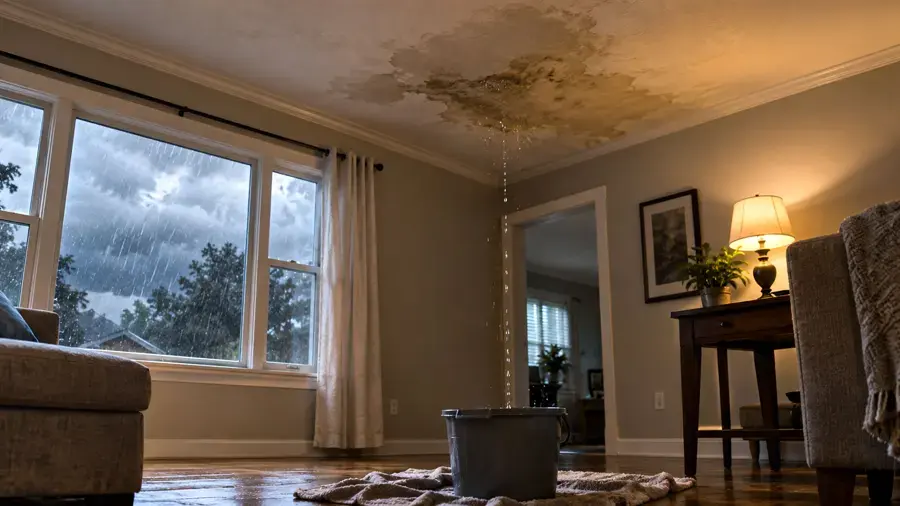
A brown or tan stain appears on the drywall of a bedroom or hallway ceiling in a Watauga home built in the 1980s, often in a spot below an attic where an air handler or other equipment sits.
Key takeaways
- In many Watauga homes, an electric air handler and its condensate drain line sit in a closet or attic, where a slow drip can stain drywall for months before anyone notices.
- A brown or tan stain under attic equipment usually means either a blocked condensate line backing up behind the drain pan or a water supply line seeping at a fitting or a bend.
- If water is still dripping or the stain is spreading, the drywall and insulation above the stain must be opened to find and stop the source, even if it looks dry on the surface.
- Condensate lines are small plastic or metal drains that can clog with algae and dust; supply lines are pressurized and can leak at fittings, at a pinhole or at a crease from how the line was routed.
Why ceiling stains appear under attic air handlers
The median year built in Watauga is 1984, and about 63 percent of homes date from 1970 to 1989. About 6,078 occupied homes use electric heat, which often means an air handler, and sometimes an electric water heater, in a closet or an attic.
That brown stain can come from a condensate drain line that clogs or a supply line that weeps slowly, and working out which one matters because it changes what happens next.
A Watauga home with an air handler or heating unit in the attic has water and air lines running inside the framed space above the ceiling below.
A supply line can drip because water clings to the outside of a cold line as condensation, or because it leaks slowly from a pinhole or fitting.
A condensate drain line that carries moisture away from the air handler coils sits at a slight downward angle and relies on that slope to move water; if the line clogs, water pools above the drain pan and seeps through the drywall below.
The stain often looks like tea-colored or mud-colored discoloration, sometimes in a small patch and sometimes in a large oval or irregular shape.
It may feel wet or moist to the touch, or it may feel dry but the insulation and framing above it are still damp.
A stain that keeps growing means the source is probably still leaking, and drying the space without finding the leak fails because water keeps running. A ceiling leak from any source is handled the same way: find it, stop it, then dry.
The condensate drain: clog and backup
An air handler removes moisture from the air and drains it through a small plastic or metal line, usually running to a floor drain, a utility sink or outside the home.
In humid North Texas summers, an air handler can drain a lot of water over a day.
If the line develops a kink, a crack or an algae blockage, water stops flowing and pools in the drain pan mounted under the handler, often running over the pan's edge and soaking into the drywall below.
Condensate blockages form from algae growth inside the dark drain line, dust and lint sucked into the opening, or a pinch point where the line was run too close to a rafter or attic joist.
In older 1980s installations, the pipe was sometimes run with a low spot in the middle instead of a steady downslope, and standing water in that low spot grows algae and hardens into a plug.
The supply line: pinhole, fitting leak or crease
A cold water supply line running to an attic-mounted water heater, an ice-maker line or a heating unit can weep water at a fitting, split open at a bend or develop a pinhole. Watauga buys its water from North Richland Hills.
Homes of this era often have copper supply lines, and aging copper can develop pinhole leaks that spray or drip into the attic space. Newer PEX lines can split at a sharp bend or a crease made when the line was threaded through framing.
Unlike a condensate backup, a supply line leak is often clear water at first, and it spreads quickly if the line is under full pressure. A stain that appears suddenly or grows quickly, especially after a plumbing repair or a hard freeze, can point to a supply line rather than condensate.
If the stain is growing, the leak is active.
Opening the drywall to find the source
Once a ceiling stain is spotted, the next step is to locate and stop the water source, and that usually means opening the drywall.
The area above the stain may look dry on the surface, but the insulation, fiberglass or cellulose, and the framing are likely wet, and opening a section allows moisture to escape and keeps biological growth from spreading into the wall cavity.
A small rectangular inspection opening just above the highest point of the stain is usually enough to start. Follow the supply line back to the source fitting if you can see it, or trace the condensate pan to where the drain line exits.
If the line is wet and water is dripping, that is the source. If the attic is wet but you cannot see water moving, the condensate pan may be full and overflowing.
Opening the drywall also reveals how deep the moisture has penetrated into the insulation and how much of the cavity must be dried. Attic insulation sits directly above the drywall, and once wet, it stays wet for weeks without active drying.
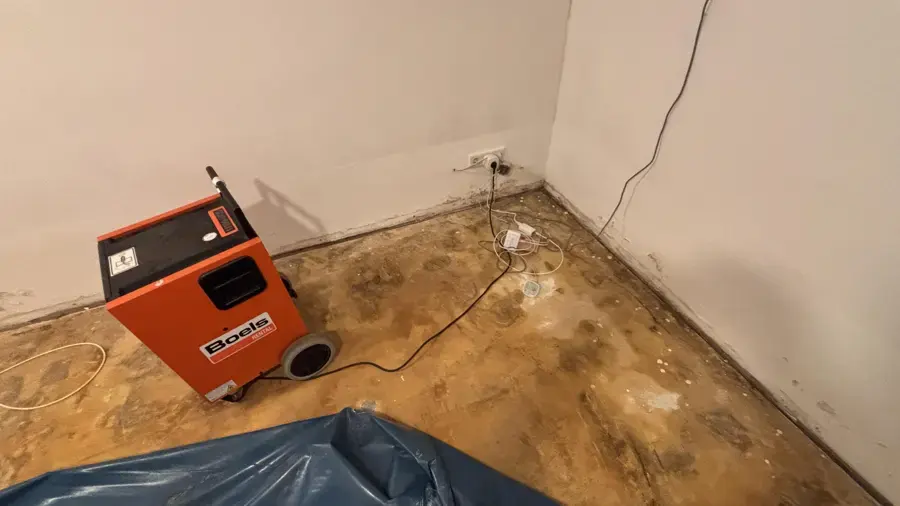
The structural drying process focuses on removing saturated insulation, running air movers and dehumidifiers to pull moisture from the framing, and allowing the cavity to dry before the drywall is patched.
What happens if you wait and do nothing
A ceiling stain that goes unaddressed for more than a few weeks almost always means the insulation above has become a moisture problem and the drywall is softening or beginning to sag.
Once drywall loses its structural strength, the stain may grow into a bulge or the drywall may crack as the weight of the wet insulation pulls on the fasteners.
Wet insulation also provides an ideal environment for biological growth, so odor or discoloration can appear if water continues to weep.
Opening the space, stopping the leak, removing saturated insulation and drying the framing is far less costly than patching a ceiling leak that has been running for months.
If the ceiling stain is in a rental unit, the tenant should photograph the stain, note the date and notify the landlord or property manager in writing as soon as it is noticed.
The lease and Texas rental rules decide who handles the repair, and a written record helps either way. A tenant's renters insurance may cover a sudden leak to belongings, depending on the policy, so it is worth checking.
First steps when you spot a stain
Look for active drips or signs of water movement. If you can safely access the attic, use a flashlight to check the condensate pan under the air handler and trace the drain line from the unit toward the exit point.
Confirm the line is not cracked, kinked or plugged. Check whether the pan is full or if water is overflowing onto the framing.
If you can find the end of the drain line outside the home, make sure it is not covered or plugged with mud or leaves. If the condensate line is clear and the pan is dry, the leak is likely from a supply line.
Take a photo or video of the stain and any visible water source, noting the date and time. If water is actively dripping, turn off the water at the main shutoff valve or call a plumber to isolate the supply line.
A ceiling leak in a Watauga home should be inspected and halted before active drying starts, because drying a space while water is still dripping wastes time and money.
Questions
How long does it take condensate to cause a ceiling stain?
A slow drip can stain drywall over weeks or months. A blocked condensate pan backing up onto drywall can show a stain within a few days of blockage. The faster the drip, the darker the stain spreads. For ongoing attic moisture problems in Watauga homes, a professional assessment can prevent larger repairs.
Should I poke a hole in the stain to drain the water?
No. Puncturing the drywall without opening a proper inspection hole can spread water to nearby areas and damage more material. Always open a rectangular section large enough to see what is above, find the source and assess how wet the insulation is.
Can I patch the ceiling stain without fixing the leak?
Patching the stain without finding and stopping the leak will fail. Water will continue to soak into new joint compound and drywall, and the stain will reappear within weeks. The source must be found and sealed first, and the cavity must be dried.
Is a brown ceiling stain always from water damage?
Brown or tan discoloration below an attic in a Watauga home is almost always from water or moisture. Stains from dust or smoke are rare in attic areas and do not feel damp to the touch. If the stain is wet, the source is water.