Calloway Branch, Walker Branch and Big Fossil Creek: Where Flash Flood Water Comes From in North Richland Hills
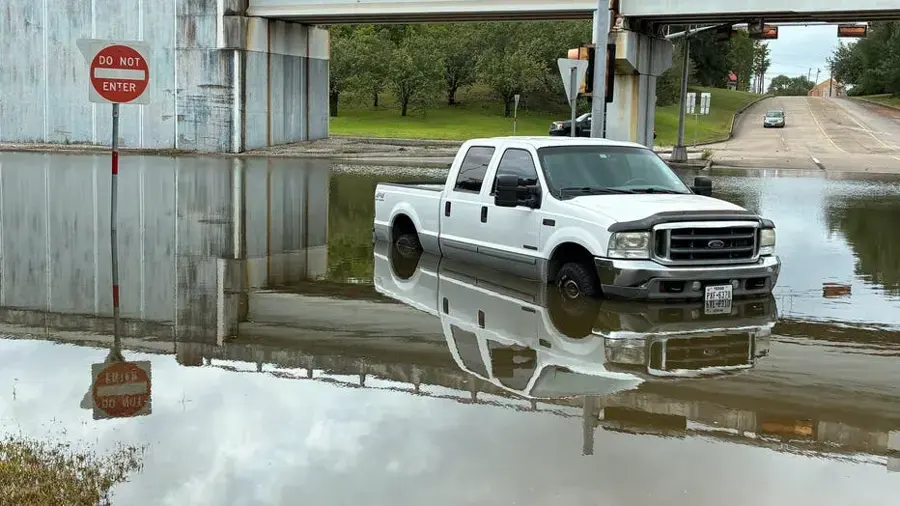
North Richland Hills has no river running through it, yet the city lists six named creeks and branches that run through or beside its limits, and a heavy North Texas thunderstorm can fill any of them in a hurry.
Key takeaways
- The city names Calloway Branch, Big Fossil Creek, Singing Hills Creek, Mackey Creek, Walker Branch and Mesquite Branch as tributaries through or beside North Richland Hills.
- National Weather Service flash flood research points to the area where Calloway Branch meets Big Fossil Creek, near US 377 and I-820, as a cluster of flood reports.
- Big Fossil Creek flooded roads in Richland Hills in June 1957, and its September 1962 flood at Haltom City was the largest the USGS had recorded on the creek since at least 1900.
- Flood water that crossed yards and streets is Category 3: carpet, pad and wet drywall come out, and the structure is cleaned and treated before drying.
- A Floodplain Development Permit is required before improvements or fill on North Richland Hills property in the 1 percent annual chance floodplain.
The creeks that drain North Richland Hills
When that water leaves a channel, or when the street drains around it cannot keep up, it heads for the lowest edge of a slab house: the garage door, the patio slider, the back wall.
Knowing which creek drains your part of town tells you a lot about how flood water reaches a home and what has to happen once it gets inside.
On its floodplain page, the City of North Richland Hills names the tributaries that flow through or alongside the city: Calloway Branch, Big Fossil Creek, Singing Hills Creek, Mackey Creek, Walker Branch and Mesquite Branch. Little Bear Creek drains the north edge of the city.
Most of these channels are narrow and spend much of the year nearly dry. That is exactly why they surprise people.
Clay soils across Tarrant County swell when wet, streets and rooftops add runoff, and a small branch can rise quickly during a slow-moving storm.
- Big Fossil Creek and Calloway Branch, which meet near US 377 and I-820 just west of the city, close to Haltom City.
- Walker Branch, which also runs into southern Hurst, where that city treats it as a flash-flood concern.
- Little Bear Creek, which drains the north edge of the city.
Where flash flooding concentrates: the Calloway Branch junction
Calloway Branch starts in south Keller and Watauga and runs south to meet Big Fossil Creek near US 377 and I-820, just west of North Richland Hills. A National Weather Service flash flood study of north Tarrant County cites clustered flood reports around that junction, along with repeated evacuations of a mobile home park on Calloway Branch.
The junction matters even to homes that are nowhere near it. When Big Fossil Creek is running high, water arriving from Calloway Branch and nearby White's Branch has less room to drain, and smaller channels upstream back up into streets and low yards.
That backwater effect can make smaller channels and streets flood during long, heavy storms.
Big Fossil Creek's flood history
Big Fossil Creek begins in far northwest Fort Worth and flows southeast through Haltom City, North Richland Hills and Richland Hills before joining the West Fork of the Trinity River, draining roughly 74.7 square miles. Two floods stand out in the record.
On June 2, 1957, WBAP-TV filmed the creek flooding in Richland Hills, with several feet of water over roads and homes threatened. In September 1962, the flood at Haltom City was described by the U.S. Geological Survey as the greatest on the creek since at least 1900.
Next door, Haltom City and the U.S. Army Corps of Engineers finished a roughly $12 million flood damage reduction project on Little Fossil Creek in 2014 after a 1981 flood caused about $10 million in damage there.
Neighboring cities on the same watershed share the same weather and the same clay, which is why water damage restoration in Haltom City follows the same storm-season pattern.
Most flood water reaches a house from the street, not the creek
Not every flooded home sits on a creek bank. Many take water because the storm drains in their street are overwhelmed, a yard slopes toward the house, or a driveway channels runoff straight at the garage door.
On a slab-on-grade house, the first place that water goes is under the bottom plate of the walls and into the carpet pad.
Water can also come up instead of in. During very heavy rain, storm water that seeps into the sanitary sewer can push it past capacity, and the lowest drain in the house becomes the overflow point.
That is a sewage loss, and it is handled with the same Category 3 care as creek water.
- Look for water lines on the outside of the garage door and the lower brick after a storm.
- Check carpet along exterior walls by pressing on it; pad soaks up water long before the carpet looks wet.
- Lift the corner of baseboard trim in back rooms if the outside wall took water; wicking stains show up there first.

What flash flood water does inside a slab home
Under the IICRC standards, water that crossed lawns, streets and storm drains is Category 3 from the moment it enters, however clear it looks. It carries soil, fertilizer, oil and often sewage.
That classification decides almost everything that follows.
The extraction crew pulls out standing water first, using truck-mounted extraction so the water leaves the building instead of spreading. The mitigation team then removes carpet, pad, baseboards and the drywall and insulation the water touched, cutting above the high-water line.
Hard surfaces are cleaned, an EPA-registered antimicrobial is applied for its labeled dwell time, and only then does structural drying start, with air movers and LGR dehumidifiers running until the framing and slab meet the drying goal.
The storm and flood cleanup page explains how that work is sequenced in North Richland Hills, and water extraction covers the pump-out that comes first.
Neighboring towns on the same creeks
Big Fossil Creek does not stop at the city limit.
Downstream, water damage restoration in Richland Hills deals with the same creek corridor that flooded its roads in 1957, and in Haltom City, Calloway Branch and White's Branch meet Big Fossil Creek near US 377 and I-820.
The steps for storm and flood cleanup in Haltom City are the same Category 3 steps used here.
Upstream, Calloway Branch begins in Keller and Watauga, so heavy rain to the north can add water to North Richland Hills channels even when the local rain gauge shows less.

Floodplain permits and flood insurance
North Richland Hills requires a Floodplain Development Permit before any improvements, including fill, are made on property in the 1 percent annual chance floodplain, which used to be called the 100-year floodplain. Rebuilding after a flood on such a lot can bring that rule into play, so the city's Floodplain Determination page is a useful first check.
Standard homeowners policies usually exclude rising surface water. Flood coverage comes from a separate flood policy through FEMA's National Flood Insurance Program or a private carrier, and most new flood policies have a waiting period before they take effect.
Wind-driven rain through a storm-damaged roof is usually a different claim. Coverage depends on your policy, so it is worth checking with your own insurer before storm season rather than after.
The first hours after creek or street water gets in
Safety comes before cleanup. Flood water can hide energized outlets and cords, and it carries bacteria.
- Stay out of moving water and never drive through a flooded street or underpass.
- Keep power off to flooded rooms; have the utility cut it at the meter if the panel is wet.
- Wear boots and gloves, and keep children and pets out of the wet rooms.
- Photograph the high-water line inside and out before anything is moved, and note the time.
- Move dry belongings up and out, but leave wet carpet and drywall for the mitigation team to remove and document.
- Call for extraction as soon as it is safe; wet materials can start to support biological growth within 24 to 48 hours.
Questions
Which part of North Richland Hills floods most often?
Flash flooding tends to follow the creek corridors, especially near where Big Fossil Creek and Calloway Branch meet at US 377 and I-820, plus any street whose drains are overwhelmed. The city's Floodplain Determination page is the place to check whether a specific lot is in a mapped floodplain.
Is creek flood water in my house dangerous?
Yes. It is Category 3 water that can carry sewage, chemicals and bacteria, and it can hide live electrical hazards. Keep power off, wear boots and gloves, and keep children and pets away.
Can carpet be saved after a flash flood?
Usually not. Carpet and pad touched by storm or creek water are porous Category 3 materials, so they are normally removed and replaced after the slab is cleaned, treated and dried.
Does homeowners insurance cover creek flooding?
Usually not; rising surface water falls under flood insurance. Coverage depends on your policy, so it is worth checking with your own insurer.
Do I need a permit to rebuild after a flood in North Richland Hills?
Property in the 1 percent annual chance floodplain needs a Floodplain Development Permit before improvements or fill. The city's Floodplain Determination page shows whether a lot is in it, and that is worth checking before rebuilding.