Cracked Brick, Sticking Doors, Then a Wet Floor: Clay Soil and Slab Leaks in Hurst
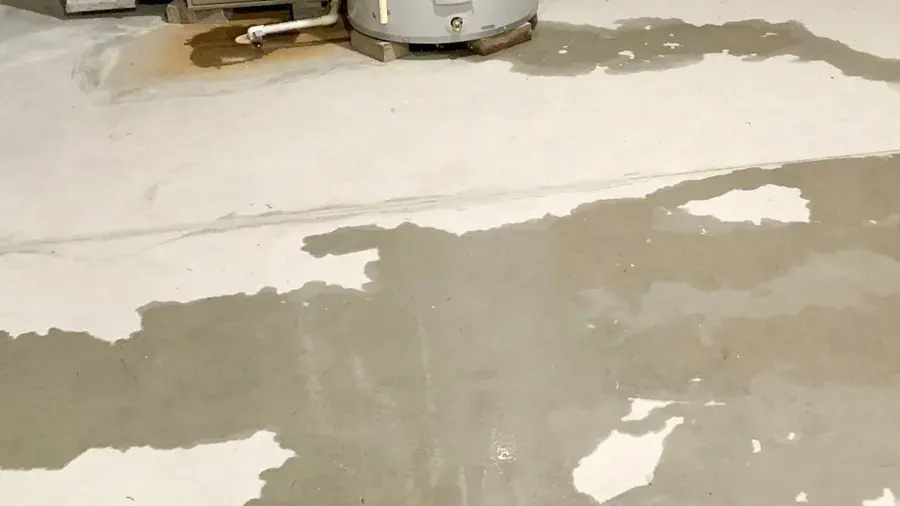
A Hurst homeowner notices cracked brick veneer, a door that sticks in its frame, or drywall cracked diagonally across a corner. These are foundation warning signs, and the cause behind them can also break water lines under the slab.
Key takeaways
- Local foundation contractors cite expansive clay, which swells when wet and shrinks when dry, as the main foundation issue in Hurst.
- Foundation movement shows up as cracked brick veneer, sticking doors, cracked drywall and wall separation, signs that plumbing under the slab may be under stress.
- About 40 percent of Hurst homes were built in the 1950s and 1960s, when galvanized or early copper supply lines and cast iron drains under the slab were commonly used.
- A slab leak hidden under flooring can go unnoticed for weeks or months until carpet, baseboards or hardwood show moisture, stains or damage.
- Hurst's population nearly tripled in the 1960s, from 10,165 in 1960 to 27,215 in 1970, so much of the housing stock is now decades old and has been through many clay cycles.
The clay foundation beneath Hurst
Hurst sits on expansive clay that swells when wet and shrinks when dry, and that seasonal movement can settle a slab unevenly. Warning signs often appear first, and water damage can follow.
Hurst's soil is primarily expansive clay, and local foundation repair contractors cite it as the main foundation issue in the city. The clay swells when it absorbs moisture and shrinks when it dries.
Over decades, that cycle of expansion and contraction causes slab settlement, cracked brick, sticking doors and cracked drywall.
The slab does not always move evenly. One part of the house can settle more than another, and that uneven movement is what produces diagonal cracks in drywall and doors that stick because their frames have shifted slightly out of square.
Many Hurst homes built before 1980 sit on slabs designed before post-tensioning cables became common, according to local foundation contractors, and those slabs are now 45 to 70 years old.
The plumbing connection: how slab movement breaks lines
Foundation movement can break plumbing lines under or near the slab, and that is the link between soil movement and slab leaks. Lines under the slab are held at certain points but not throughout their length.
When the slab shifts, a line can be pulled or bent where it connects to the foundation or changes direction.
Copper lines can pinhole or crack at stress points, galvanized lines weakened by age can split, and cast iron drain lines are brittle and can crack.
Once a line cracks, water leaks into the soil under the slab. It follows the path of least resistance, soaking the soil around the break and wicking upward into the concrete, the pad and the flooring above.
A homeowner might not know the leak exists until the floor shows signs: a soft spot in carpet, a stain on the underside of baseboard trim, or moisture at the junction between the slab and the exterior wall.
The 1960s boom and aging infrastructure
Hurst's population jumped from 10,165 in 1960 to 27,215 in 1970, nearly tripling in a single decade. That growth meant a large share of the city's homes were built in a short window, in the style of the time: single-story brick on a concrete slab.
Supply lines in homes of that era were commonly galvanized or early copper, with cast iron drains under the slab. That is an era pattern for Texas, not a confirmed record for Hurst.
Roughly 17 percent of Hurst homes were built in the 1950s and roughly 23 percent in the 1960s, so about 40 percent of the housing stock dates from those two decades.
Many of those homes are now more than half a century old, and the clay beneath them has cycled through wet and dry seasons for all of that time. Aging pipe and moving soil are a realistic combination.
Reading the foundation warnings: cracks, doors and settlement
Homeowners in older Hurst neighborhoods should know the signs of foundation movement, because they can appear well before a slab leak shows through wet flooring. The first warning is often cracking in the brick veneer.
These are not hairline cracks in mortar; they are cracks in the brick itself, often diagonal and wider at one end, and they suggest the wall has moved.
Sticking doors and windows are another sign. If a door that used to close smoothly suddenly binds in its frame, or a window slides harder than before, the frame has probably shifted relative to its opening, which reflects movement in the structure.
Cracked drywall, especially diagonal cracks across corners, also points to foundation movement. When one side of a house settles more than the other, stress concentrates at corners and cracks appear.
Small cracks can be cosmetic, while larger diagonal cracks suggest the movement has been significant.
From foundation signs to water damage
A homeowner who has noticed cracked brick, sticking doors or cracked drywall should be alert to the possibility of a slab leak in Hurst developing underneath. The two problems often share a cause, clay soil movement, and one can lead to the other.
A foundation contractor can assess the severity of the cracks and recommend stabilization or repair. A plumber can run a camera down the drains and pressure test the supply lines to rule out breaks before they become expensive damage.
Many Hurst homes are one-story brick ranch layouts built on slabs. When a line breaks, water that seeps into the soil under the slab can wick upward into the concrete and the flooring.
In wall-to-wall carpet homes, the first sign is often a soft spot, a stain on the carpet, or the smell of musty concrete. In hardwood areas, cupping or staining appears first.
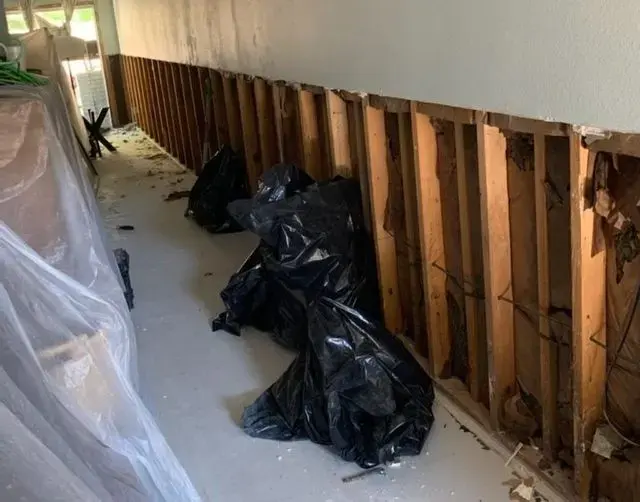
Baseboards and drywall at the junction with the slab are often the first places stains show.
Slab leaks in carpet and the extraction challenge
Many Hurst homes have wall-to-wall carpet over pad on the concrete slab. When a slab leak occurs, the carpet and pad absorb water like a sponge, and pad wicks water across a large area under the carpet.
Because the leak starts under the flooring, a homeowner might not notice it until the carpet is visibly damp or stained, by which time water has been in the carpet and pad for hours or days.
At that point the pad usually has to come up, and the carpet is dried or removed depending on how long it stayed wet and what the water category is.
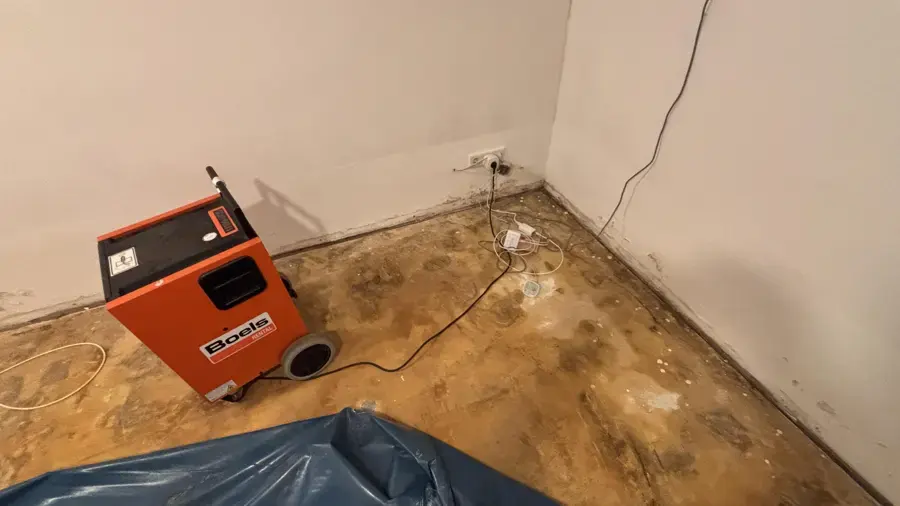
The slab underneath is cleaned, treated and dried with air movers and dehumidifiers before new flooring goes in. For a leak under an interior room, the damage can be localized.
For a leak near a corner or under an exterior wall, moisture can wick a long distance and the work area can be much larger. Carpet water damage work depends heavily on how long the water was under there before it was discovered.
Prevention and early detection
In a Hurst home with foundation movement signs, early detection can prevent a larger water loss. A plumber can run a camera inspection down the main drain line to look for cracks and can check the supply lines with a pressure test.
If a leak is found early, the line can be repaired or replaced before water accumulates. If a homeowner waits until carpet is visibly wet, the cleanup and restoration will be more extensive.
Seasonal monitoring is also helpful. After a wet spring, when the clay is at maximum swell, homeowners can check the foundation and walls for new cracks or movement.
If new cracks or sticking doors keep appearing with the seasons, that suggests active clay movement, and it is a good time to have a plumber inspect the lines before a leak starts.
The same soil conditions affect nearby homes in North Richland Hills, so the slab leak water damage page applies there as well, and the Hurst service area page covers the rest of the local services.
Questions
How long can a slab leak go undetected?
A leak can go unnoticed for weeks or months. A leak that wicks to a wall or exterior edge may show staining or moisture sooner. Once it is discovered, cleanup should start within 24 to 48 hours to limit biological growth.
If I see foundation cracks, do I definitely have a slab leak?
No. Foundation cracks signal movement and stress in the structure, but they do not automatically mean a plumbing line has broken. The same soil movement that causes cracking can break lines underneath, so it is worth having a plumber check the lines with a camera and pressure test before a leak develops.
Can a slab leak be repaired without replacing the carpet?
Sometimes. Pad that has absorbed water from a slab leak is usually removed, and the carpet is dried or replaced depending on the water category and how long it stayed wet. The slab can be cleaned, treated and dried, and new flooring installed once the structure is dry.
Why are older Hurst homes more likely to have slab leaks?
About 40 percent of Hurst homes were built in the 1950s and 1960s, when galvanized or early copper supply and cast iron drains were common under the slab. Those materials are now decades old, and the clay soil has expanded and contracted around them for all that time. Post-2000 construction commonly uses PEX and PVC.
What should I do if I find water under my carpet near the slab?
Start water extraction quickly. Wet carpet and pad need to be dealt with fast to limit damage to the slab and subfloor. An extraction crew can remove the pad, pump out standing water and assess whether the slab has been affected. The longer the material stays wet, the more the damage spreads.