Wet Carpet in a Euless Apartment: Deciding Between Drying and Replacement
The difference between replacing the pad and drying it in place can mean days of occupancy, hundreds of dollars, and a decision that depends entirely on what water reached the carpet. Supply-line water is Category 1 or 2. Drain water or sewage is Category 3. That classification decides almost everything that follows.
Key takeaways
- Water source determines pad fate: clean supply water may dry in place, but drain water or sewage requires pad removal and replacement.
- Water wicks through carpet into the pad, tack strips and slab edge within hours, making speed critical.
- Euless's slab-on-grade housing, 1986 median build year and large rental share create frequent wet-carpet situations.
- Insurance coverage can depend on the category of water, since a supply-line leak and a sewage backup are often treated as different claims.
- Both tenant and landlord have roles in the first hours: stopping the water, documenting it, and calling for extraction before biological growth begins.
Why Euless apartments flood carpet in the first place
The difference between replacing the pad and drying it in place can mean days of occupancy, hundreds of dollars, and a decision that depends entirely on what water reached the carpet. Supply-line water is Category 1 or 2.
Drain water or sewage is Category 3.
About 28.5 percent of Euless housing was built between 1980 and 1989, and the median year built across the city is 1986. Large apartment complexes are part of the Euless housing mix, including Twinbridge Apartments and Brentwood Terrace Apartments on Euless Boulevard near Boyd Branch.
Slab-on-grade construction is the norm in this part of Texas, and apartments and rental homes are typically carpeted over pad. Expansive clay soil shifts with wet and dry seasons, which can stress supply and drain lines running under a slab.
In a renter-heavy city, where about 60 percent of households rent, aging water heaters and appliances are common in rental units. A ruptured supply line, a burst hose behind a washer, or a clogged drain backing up through the floor can saturate carpet and pad in minutes.
- Supply line splits or joint failures at water heater connections, main shutoffs and under-sink lines.
- Appliance hoses on older washers and dishwashers, which often age faster than the home.
- Drain clogs that back up and push water up through the lowest fixture in the apartment, often on the slab.
How water moves through carpet and into pad within hours
Carpet sits on pad, which sits on tack strips glued to the slab. When water reaches the carpet edge or a seam, it wicks down through the pile into the pad.
Once the pad is wet, water moves horizontally across it under the slab edge and along the tack strips. In a humid Texas climate, biological growth can begin within 24 to 48 hours.
A visual check of the carpet surface can be misleading. Carpet can look dry while the pad underneath absorbs water.
The surest test is to lift the carpet edge or press the pad from below; if moisture shows up at the tack strip or the slab edge, the entire pad is likely saturated.
Category 1 supply water: when the pad can stay
If the water came from a clean supply line or a broken faucet that released only potable water, it is Category 1. That water can sometimes dry in place if the extraction starts fast enough and the pad is thin and the air handling system can run full-time.
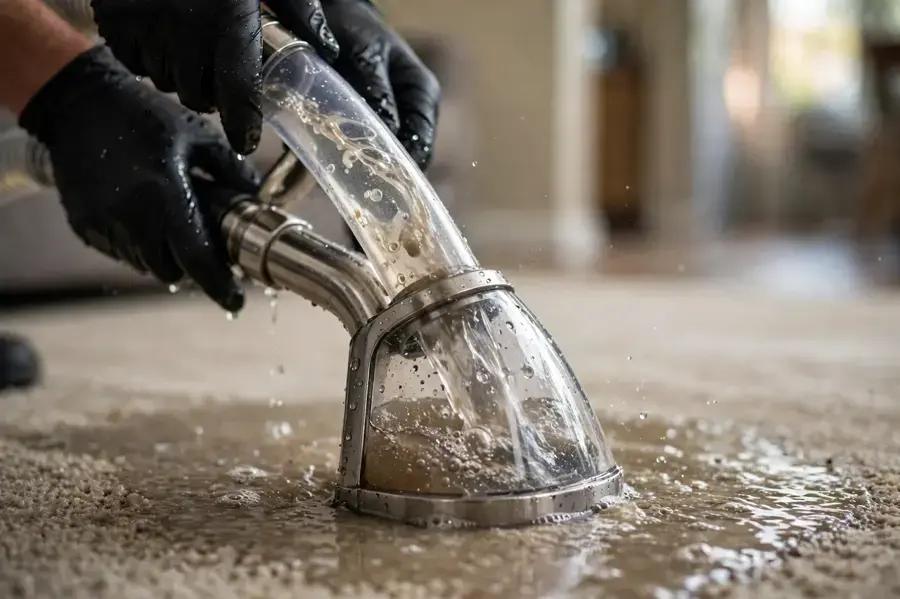
The steps are extraction of standing water first, using truck-mounted suction so water leaves the building instead of soaking deeper. Then industrial air movers and dehumidifiers run to dry the carpet, pad and slab.
Baseboards stay in place. The drying typically takes several days to a week, depending on humidity, air flow and how much water the pad absorbed.
This option keeps the apartment in service faster and costs less in materials. For a landlord with turnover pressure or a renter stuck in place, it can be the path that saves both time and money.
A water extraction crew in Euless can assess whether the carpet and pad are salvageable by feeling the moisture depth.
Category 3 drain or sewage water: pad removal is expected
If the water came from a toilet overflow, a drain backup, a sewage event or street floodwater, it is Category 3 from the moment it touches the carpet, no matter how clean it looks. Category 3 materials carry bacteria, viruses and chemical contaminants, and IICRC standards require their removal.
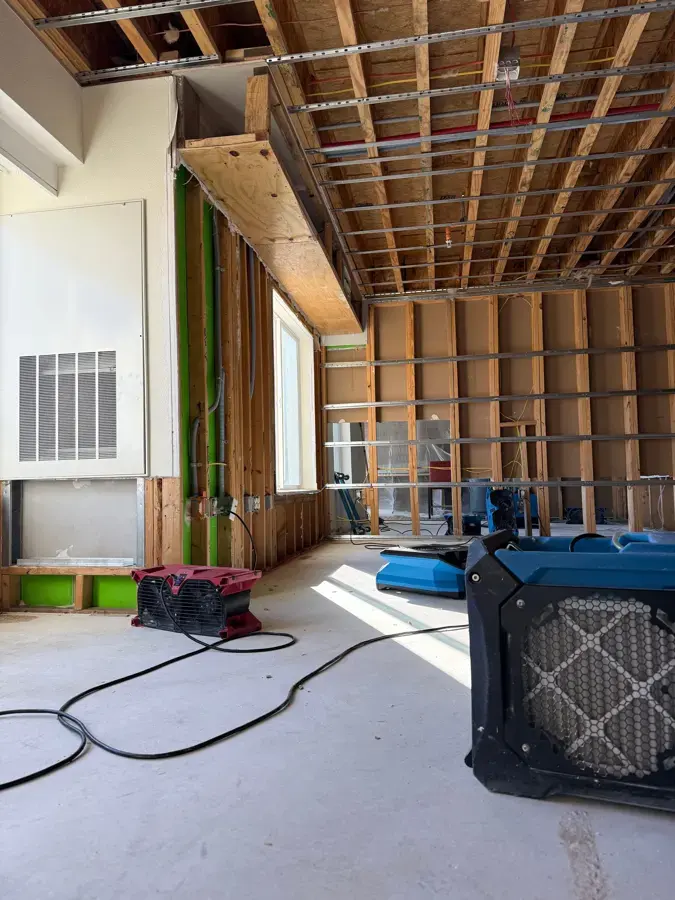
The extraction crew pulls out standing water first. Then the mitigation team removes carpet, pad, tack strips, and baseboards the water touched, and cuts drywall above the water line.
Hard surfaces are cleaned with an EPA-registered antimicrobial applied for its labeled dwell time.
Only after that cleanup does structural drying start with air movers and LGR dehumidifiers until the slab meets the drying goal.
For an apartment, this means the unit is offline for drying. A renter may face a few days in temporary housing or a hotel.
A landlord must budget for pad and flooring replacement, as well as drying time. Sewage backup is a different claim from a supply-line leak, so insurance coverage depends on the policy.
Tenant and landlord steps in the first hours
A renter's first call is to the landlord or the management office. Document the water source and the extent: photograph the wet area, the water line on walls if there is one, and any source like an open hose or standing water.
Keep children and pets out of the wet space until the water is contained.
The landlord's first step is to locate and shut off the water if it is still running, or contact the city if the water is from outside (a main break, for example). Then call for extraction as soon as it is safe.
The goal is to get truck-mounted suction and air flow started before the pad saturates beyond drying.
If the water is sewage or drain-related, both sides need to understand that pad replacement is not optional. The city's Public Works water and wastewater division maintains the city lines and can be asked whether a backup involves a city main.
Who owns the lateral is not settled by a general rule, so the lease and the property manager matter. The extraction and drying team can advise on category and next steps.
Insurance, permits and the speed of turnaround
Most standard rental or homeowner policies cover sudden water loss from a supply line. Drain backup and sewage are often separate claims or excluded, depending on the policy.
A tenant with renters insurance should report the loss to their insurer. A landlord should contact their property insurance agent and describe the water source.
The median gross rent of $1,690 makes turnaround time costly for a landlord; longer drying means lost rent. For a tenant, it may mean living without a habitable unit.
Both sides benefit from calling for help quickly and from knowing the water source before making the drying choice.
A water extraction service in Euless or a carpet water damage team can assess the water source, the depth of pad saturation, and whether Category 1 drying is realistic or whether Category 3 removal is required. The earlier in the day that call is made, the sooner the extraction can begin and the sooner the drying timeline starts.
Questions
How long does it take to dry carpet and pad after a supply-line leak?
If extraction begins within a few hours of the leak and the pad is thin, drying usually takes several days to a week with industrial air movers and dehumidifiers running continuously. Thick pad and slow air flow extend the timeline.
Can a tenant force a landlord to dry the pad instead of replacing it?
No. The water category decides the method. If the water is Category 3, pad removal is the standard approach under IICRC practice. If it is Category 1 and the landlord chooses to replace the pad anyway, that is the landlord's decision.
What if the landlord and tenant disagree on the water source?
The extraction and drying crew can make an assessment based on the water look, smell, and where it came from in the apartment. If the source is unclear, the city may be able to advise (for example, if a main break caused it). Documentation and photos taken early help resolve the disagreement.
Does renters insurance cover a wet-carpet loss?
Sudden water loss from a supply line is usually covered by renters insurance. Drain backup is often excluded or requires a separate rider. The renter should check their policy or call their insurer to report the loss.